How Long is Ice Cream Good for in The Freezer
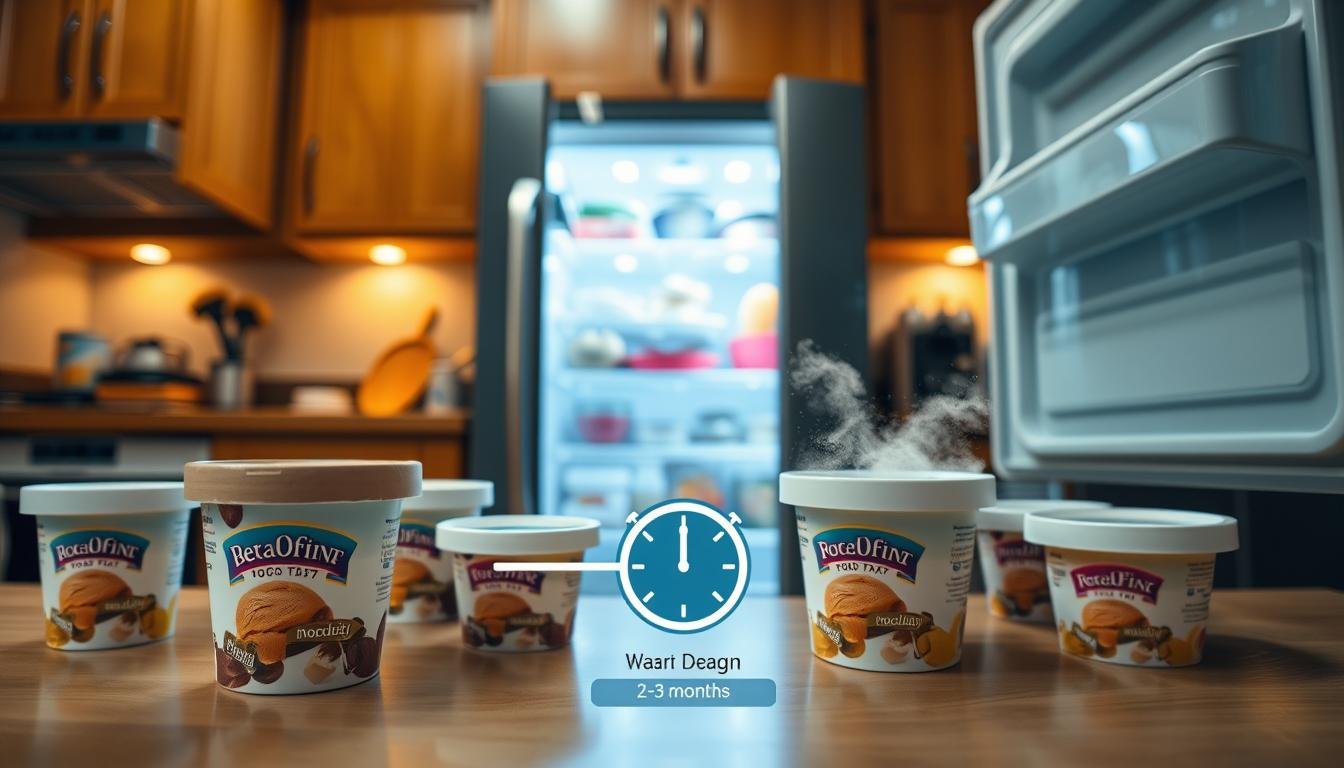
We explain how long store tubs keep peak flavor and when safety becomes the main concern. Opened pints stay at their best about six weeks at 0°F. Unopened tubs usually taste freshest for two to three months at 0°F.
Freezing slows change but does not stop it. After six weeks, texture and taste can fade even though food may remain safe for up to three or four months. If a tub fully melts and sits over an hour, we discard it rather than risk illness.
We also note what shortens life: air exposure, temp swings, and repeated softening. Later sections show simple steps we use at home to protect taste and quality — keep the appliance at 0°F, use airtight containers, and limit headspace.
Key takeaways: unopened tubs taste best 2–3 months; opened tubs peak about six weeks; safety may extend to 3–4 months but flavor drops; discard if fully melted over an hour.
At a glance: shelf life, safety, and quality right now
Here’s a fast snapshot of what we expect from a tub stored at 0°F. Unopened packages keep peak taste for about 2–3 months, while opened pints are best within roughly six weeks. For safety, many tubs stay a safe eat for three to four months, but quality often drops sooner.
Keeping the freezer steady at 0°F reduces ice crystal growth and preserves smoother texture. Good storage habits — tight lids, minimal openings, and limited headspace — extend usable life and slow spoilage.
- Check appearance and smell: creamy texture and normal color usually mean good quality.
- Watch handling: temperature abuse raises bacteria growth risk, so limit time at room temperature.
- If the container looks gritty, sour, or oddly colored, we inspect more closely and likely discard.
| Condition | Typical storage | Best-by (taste) | Safe-eat window |
|---|---|---|---|
| Unopened tub | 0°F, unopened | 2–3 months | Up to 3–4 months |
| Opened pint | 0°F, limited air | About 6 weeks | Up to 3–4 months |
| After temp abuse | Repeated thawing | Texture and flavor decline fast | Higher spoilage risk |
How Long is Ice Cream Good for in The Freezer: timelines and what affects them
Timelines vary: store tubs age more slowly than homemade batches, and handling often decides the real shelf life.
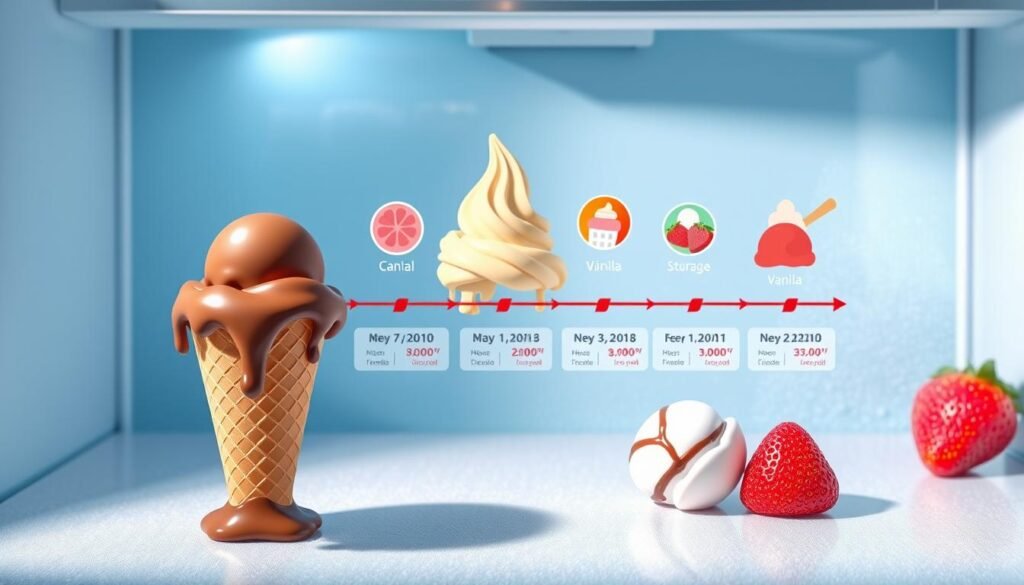
Unopened vs opened store-bought tubs at 0°F
Unopened tubs typically keep peak taste for about two to three months at 0°F. Opened pints usually taste best for around six weeks before texture and flavor fade.
Homemade batches and other styles
Without stabilizers, homemade ice cream holds two to four weeks. Gelato usually lasts one to two weeks and sorbet about three to four weeks.
Quality window vs safe-to-eat window
Flavor and smoothness often decline sooner than safety. Even after six weeks a tub may remain safe up to three to four months, but quality drops and crystals grow.
Key factors that shorten usable life
- Air exposure and extra headspace increase freezer burn and grainy texture.
- Temperature swings from the door cause repeated thaw/refreeze and bigger crystals.
- Storing tubs at the back or bottom helps stabilize temperature and extend life.
| Product | Typical best-by | Safe-eat window |
|---|---|---|
| Unopened store tub | 2–3 months | Up to 3–4 months |
| Opened pint | About 6 weeks | Up to 3–4 months |
| Homemade ice cream / gelato / sorbet | 2–4 weeks (gelato 1–2) | 2–4 weeks |
How we store ice cream to keep it creamy and avoid ice crystals
Practical storage steps help us protect scoopability and avoid frost buildup. We focus on steady cold, limited air, and quick handling to preserve texture and flavor.

Set a steady temperature and place tubs at the back
We keep the freezer at 0°F to slow melt–refreeze cycles. Pints live at the back or bottom where temperature stays steady and away from the door.
Use airtight containers and cover the surface
We transfer soft tubs into freezer-safe containers when needed. We press plastic directly onto the surface before sealing to cut air contact and protect the top layer.
Minimize air and organize for quick access
We reduce headspace, use shallow wide containers, and store upside-down sometimes to limit surface exposure. We arrange items so cold air flows and we can close the door fast.
Smart serving habits
We scoop quickly, replace lids, and return the tub to its dedicated spot. This consistent way of handling keeps cream back smoother over time.
| Action | Why it helps | Practical tip |
|---|---|---|
| Set to 0°F | Reduces crystal growth and texture loss | Check with a freezer thermometer monthly |
| Back or bottom placement | Stable temperature away from warm door air | Assign a dedicated spot for tubs |
| Airtight + plastic on surface | Limits air, moisture loss, and freezer burn | Press plastic wrap onto the surface before sealing lid |
| Shallow, wide containers | Faster, even freezing; smaller crystals | Use shallow tubs for leftover portions |
Freezer burn vs gone bad: tell-tale signs on the surface and taste
We look at surface clues that separate simple freezer burn from truly spoiled dessert. A brief check of the top layer, the lid underside, and the container exterior tells us most of what we need to know.
Freezer burn and ice crystals: safe but lower quality
Freezer burn shows as dry ice crystals and a crunchy top layer. This happens when moisture leaves the product and refreezes on the surface.
The result is poorer texture and dulled taste. We can scrape off the crystalized layer or blend the remainder into milkshakes to salvage it.
Spoilage red flags: when to toss
Sticky or heavily frosted exterior, bulging tubs, or leaking lids point to repeated warming and higher spoilage risk.
Wet, gooey crystal patches, sour aromas, or a grainy, crumbly texture suggest bacteria growth. If multiple clues appear, we discard the tub.
| Sign | What it means | Action |
|---|---|---|
| Small dry crystals | Dehydration of surface; quality loss | Scrape top or repurpose |
| Gooey patches or slimy feel | Possible microbial growth | Discard immediately |
| Sticky or frosted container exterior | Repeated thaw/refreeze cycles | Inspect closely; toss if odors or bulging |
When to toss it: melted ice cream, refreezing, and bacteria growth
One clear rule helps us decide whether to save or toss a melted pint. If a tub has fully melted and stayed warm more than one hour, we discard it. That time window marks rising bacteria risk and ends any safe eat claim.
Softening at the edges is a different situation. If the surface feels soft but the container stays cold and returns to 0°F quickly, we usually refreeze and use soon. Fully liquid tubs are not worth refreezing: texture changes and safety both suffer.
Salvage tips and warning signs
- Freezer burn and dry crystals can be scraped away; the rest is still safe to eat if no off odors.
- Blend frost-affected scoops into a milkshake as a better way to enjoy reduced quality.
- Discard when we detect sour smells, slimy feel, bulging lids, or other signs that ice cream gone bad.
| Situation | Action | Why |
|---|---|---|
| Fully melted >1 hour | Toss | Temperature abuse raises food safety risk |
| Surface soft but cold | Refreeze soon | Quality loss likely, but generally safe |
| Freezer burn / crystals | Scrape or blend | Safe; quality reduced |
We protect tubs by insulating pints after checkout and limiting door openings during serving. Good storage and careful handling keep flavor high and reduce the chance that cream gone unsafe.
Make homemade ice cream last longer without losing creamy texture
We focus on small changes that keep homemade batches smooth and scoopable longer.
Building a custard base with egg yolks slows crystal growth and preserves rich mouthfeel.
Swapping part of the sugar for corn syrup or honey does the same.
A pinch of guar or xanthan gum helps bind extra water without a gummy result.
Stabilizers and sweeteners
We use egg yolks or a sugar swap to protect creamy texture.
Tiny amounts of gums add stability and cut big crystals.
One to two tablespoons of neutral alcohol per quart keeps scoops softer.
Small-batch strategy
Portion into shallow, wide containers so mixtures freeze fast.
Press plastic onto the surface before sealing the lid to block air.
Keep the freezer at 0°F and label each container with date and flavors.
Homemade ice typically keeps its best life for two to four weeks; gelato and sorbet vary.
| Technique | Benefit | Practical tip |
|---|---|---|
| Custard base / egg yolks | Richer, fewer crystals | Cook to 170–175°F, cool before freezing |
| Corn syrup or honey | Smaller crystals, softer scoop | Replace 10–20% of sugar |
| Shallow container + plastic | Faster freeze, protected surface | Use wide, shallow tubs; press plastic on top |
Savor every scoop: our practical roadmap to peak flavor and safety
.
We close with a simple roadmap that keeps every scoop pleasant and safe. Set your freezer to 0°F and stash tubs at the back to avoid temperature swings. Scoop quickly, seal lids, press plastic on the surface, and cut headspace to slow ice crystals and freezer burn.
For homemade ice cream, use egg yolks, a bit of corn syrup or honey, or tiny amounts of gum. Freeze in shallow containers for faster set and smaller crystals.
Scrape or blend dry, burned tops but toss any tub that smells sour, feels slimy, bulges, or fully melted and sat out beyond an hour. Date-label and rotate flavors so we enjoy peak taste and reduce waste.