How To Make Alcoholic Ice Cream
We set the stage for a clear, reliable recipe that balances spirit and structure. Alcohol lowers a custard’s freezing point, so we explain safe limits and why too much booze stops a quart from firming.
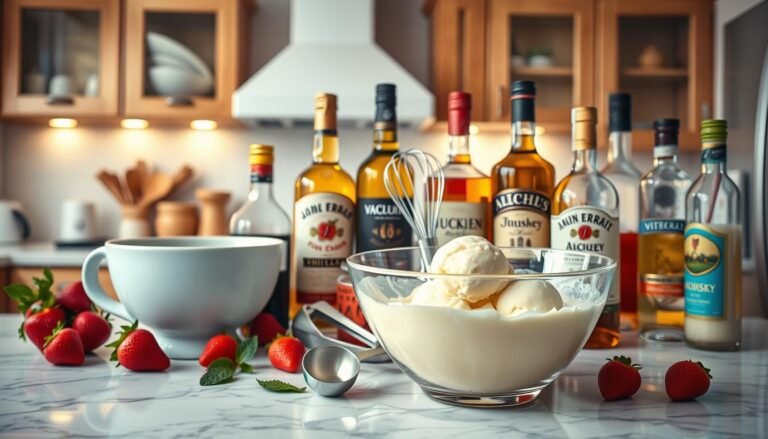
Spirits, liqueurs, wine, and beer add depth. Barrel-aged whiskey, rum, and brandy bring wood notes. Gin and tequila add bright botanicals. We note that vodka-like extracts are ethanol carriers, not body builders.
Body comes from cream, milk, egg yolks, and viscous sweeteners. For a standard quart, more than 5–6 tablespoons of 80-proof liquor can prevent a firm scoop. We share a simple way to keep texture while amplifying flavor.
We preview two frameworks — espresso martini and whiskey salted caramel — and outline our approach: build a balanced base, chill well, churn properly, add alcohol cold, then harden in the freezer. Troubleshooting tips follow so first-time makers of homemade ice cream feel confident.
Why Booze Belongs in Ice Cream Right Now
A measured splash of liquor modernizes classic frozen recipes, bringing richer taste and easier serving. We use spirits as a tool that deepens aroma and improves scoopability without industrial stabilizers.
Alcohol increases the unfrozen syrup fraction around ice crystals and fat. That lowers the freezing point just enough to make a silkier mouthfeel. Small pours (1–2 tablespoons of 80-proof) add a hint; 3–4 tablespoons give clear character; 5 is a strong threshold for a quart. Over 6 tablespoons can prevent a set.
Different proofs behave in different ways. Liqueurs let us add more volume but can dominate flavor. Beer and wine often work best reduced gently, then brightened with a fresh splash at the end.
We also keep storage in mind. Alcohol softens the cream matrix but won’t stop long-term iciness from melt-refreeze cycles. For busy entertaining, a boozy ice cream offers an easy, elegant way to serve straight from the freezer while staying balanced.
| Type | Signature Notes | Safe Range (tbsp/quart) |
|---|---|---|
| Whiskey/Rum | Warm, woody | 1–4 |
| Liqueurs | Sweet, concentrated | 2–6 |
| Beer/Wine | Malt, fruit, tannin | Reduce then 0.5–2 |
The Science of Boozy Ice Cream Texture and Freezing
The freezing behavior of water, alcohol, and sugars decides whether a frozen dessert will set firm or stay scoopable. Water freezes at 32°F; ethanol at about -173°F, and an 80-proof spirit like vodka freezes near -16°F. That wide span explains why small alcohol additions change set more than flavor.
Why a little alcohol softens but doesn’t build body
Alcohol lowers the freezing point of the milk-cream-sugar mixture and increases the unfrozen syrup phase around ice crystals. More unfrozen syrup and entrained air give a silkier initial texture.
Limits and proof matter
For a quart, about 5–6 tablespoons of 80-proof is the practical ceiling. One to two tablespoons add subtlety; three to four give a clear kick. Lower-proof liqueurs let us add volume but can overpower taste.
| Type | Signature | Safe tbsp/quart |
|---|---|---|
| Whiskey | Warm, woody | 1–4 |
| Liqueur | Sweet, concentrated | 2–6 |
| Wine/Beer | Fruit, malt | Reduce then 0.5–2 |
Practical notes
Sugar and milk solids also lower freezing point, so we balance milk and cream rather than letting booze dictate texture. Add spirits cold and late to protect emulsion. Remember: alcohol speeds melting, so proper hardening and storage remain essential.
Ingredients and Gear for a Creamy, Scoopable Result
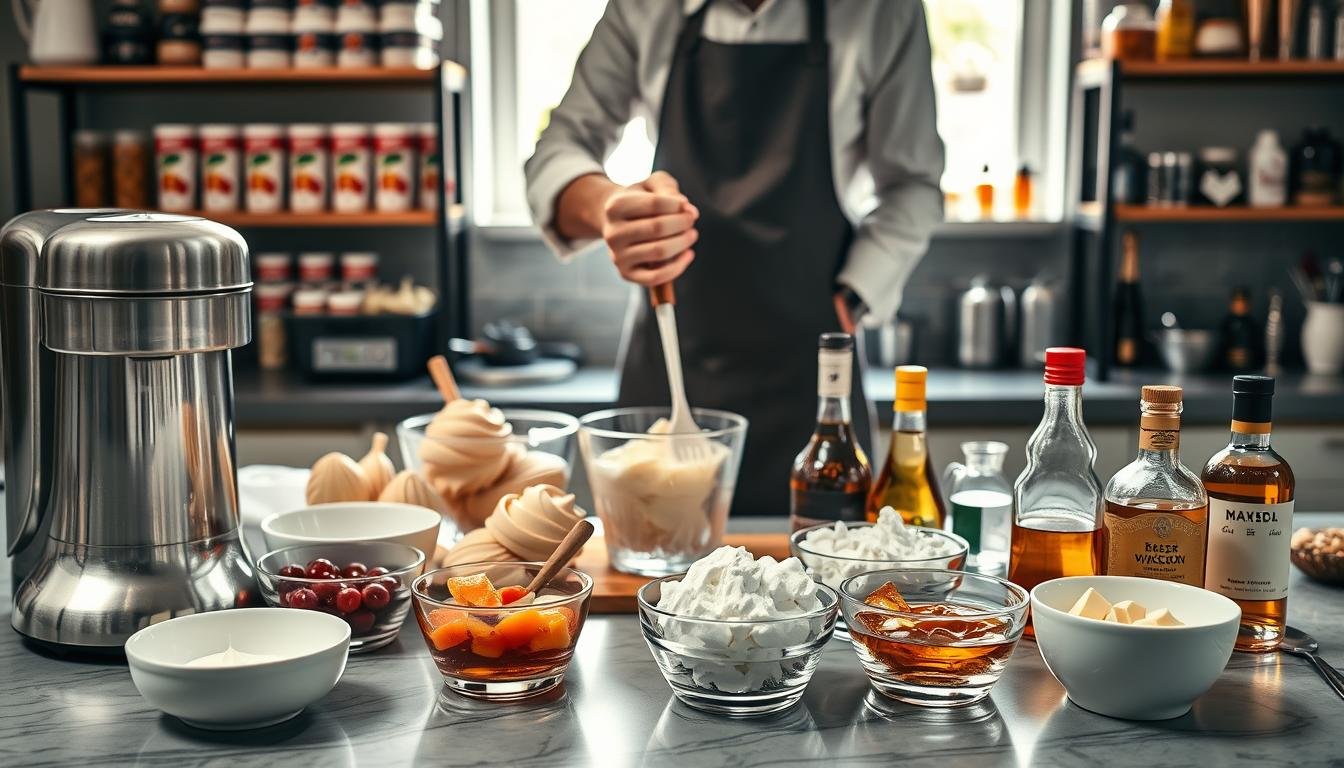
Good ingredients and the proper gear give us a predictable, scoopable result every time. Start with a clear list and a simple plan for chilling, tasting, and churning.
Building a rich custard base
We use milk, cream, sugar, and egg yolks with a pinch of salt and vanilla for a stable base. Heat gently until the custard coats the back of a spoon; that test replaces a strict thermometer.
Chill the mixture fully before adding spirits. A small chilled sample, bumped with a teaspoon of spirit, helps us dial flavors without overdoing liquids.
Picking spirits and flavor behavior
Irish whiskey brings warm, oaky notes that pair well with caramel. Vodka offers neutral lift, and liqueurs give concentrated flavors for espresso-style profiles.
Always add alcohol cold and late so the emulsion holds and the machine can form a proper set.
Equipment: machine, hand churn, and storage
- Choose a compressor unit or a pre-frozen bowl ice cream maker that fits your kitchen and batch size.
- Hand-churn with a freezer-safe bowl and electric beaters, scraping and beating every 45–60 minutes for 6–8 cycles.
- Use a wide, shallow freezer-safe container with parchment over the surface and a tight lid to reduce ice formation.
| Spirit | Signature | Safe tbsp/quart |
|---|---|---|
| Whiskey | Oaky, warm | 1–4 |
| Vodka | Neutral lift | 1–3 |
| Liqueur | Concentrated flavor | 2–6 |
Checklist: silicone spatula, fine-mesh sieve, clean bowl for chilling, and optional thermometer. Keep bowls and alcohol cold to protect texture during churn.
How To Make Alcoholic Ice Cream Step by Step
A precise, step-by-step routine keeps texture stable while we infuse flavor and control freezing.
Infuse and temper
We warm milk, sugar, and salt over low heat without boiling. If we add ground coffee, we pull the pan off heat and steep for about an hour.
Next, we whisk egg yolks and temper them by streaming warm dairy in slowly. Return the mix to low heat and stir until the base coats the back of a spoon. That visual test replaces a strict thermometer and takes just minutes.
Cool, add cream, and chill
After straining, we stir in cream and vanilla, then cool the custard for about 60 minutes on the counter. Measure alcohol in tablespoons and add it cold so the emulsion stays intact.
Chill the mixture at least six hours or overnight. A fully fridge-cold base gives better overrun and a firmer set when churning.
Churn: machine or hand
- Machine: churn 20–30 minutes until soft-scoop, then transfer to a chilled container and cover the surface with parchment before hardening for hours.
- Hand: freeze 45–60 minutes, beat 2–3 minutes with a mixer, and repeat 6–8 cycles to break ice crystal growth and build body.
Finishing notes
Layer a caramel swirl in thirds for neat ribbons without breaking the emulsion. Keep milk and alcohol measured, and add vodka or liqueur cold at the end for the best set.
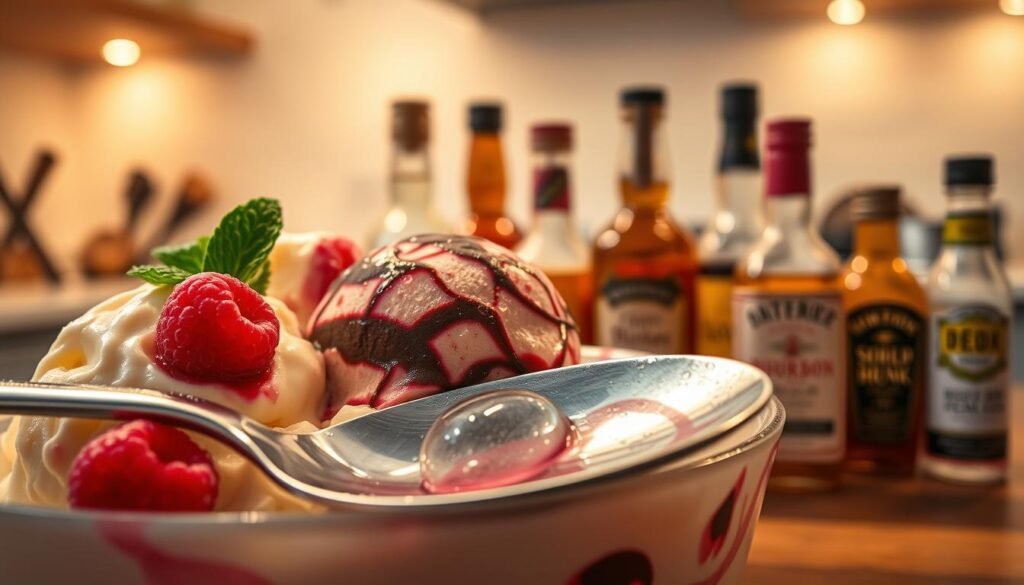
| Step | Timing | Outcome |
|---|---|---|
| Infuse | ~60 minutes off-heat | Stronger flavor without bitter heat notes |
| Chill | 6+ hours | Cold base, better churn |
| Churn | Machine 20–30 min / Hand cycles 6–8 | Soft-scoop texture ready for hardening |
Flavor Blueprints: From Espresso Martini to Whiskey Salted Caramel
These flavor roadmaps show how coffee, whiskey, and citrus profiles translate into frozen treats.
Espresso martini
Infuse milk with 1–2 tablespoons ground coffee, strain, then chill the base. Stir in 100 ml Baileys, 40 ml coffee liqueur, and 20 ml vanilla vodka cold before churning.
This mix yields a scoopable ice cream straight from the freezer thanks to the measured alcohol and sugar balance.
Irish whiskey vanilla custard
Make a classic custard with warm cream and milk, temper yolks, and thicken until it coats a spoon. Stir in 1/4 cup plus 2 tablespoons Irish whiskey and vanilla.
Layer churned ice cream with six tablespoons salted caramel in thirds, press parchment to the surface, and freeze until firm. Serve with extra caramel and toasted pecans.
Cocktail-inspired variations
- Manhattan: rye plus sweet vermouth for a dark, spiced slice.
- Margarita: tequila, Cointreau, and lime zest for bright citrus notes.
- Old Fashioned: bourbon with orange and bitters for warm orange aroma.
| Style | Key spirits | Notes |
|---|---|---|
| Espresso | Baileys, coffee liqueur, vodka | Robust roast, scoopable |
| Whiskey caramel | Irish whiskey | Sweet-salty ribbons, toasted nuts |
| Cocktail pint | Bourbon, tequila, rye | Adjust sugar; add spirits cold |
Pro Tips, Timing, and Troubleshooting for Boozy Batches
When a boozy batch won’t set, we run a quick checklist. First, did the custard chill fully? Second, were tablespoons of spirit counted correctly? Third, was the machine bowl frozen solid?
Why a pint won’t firm and how we fix it fast
Soft pints usually come from a warm base, too much alcohol, or a thawed bowl.
Fixes we use: rechill the custard for several hours and refreeze the bowl 24 hours. If alcohol is the issue, whisk in a small amount of plain custard without more booze, then chill and churn again.
Managing tablespoons, proof, and total liquid load
- Count every tablespoon of spirit and liqueur; liqueurs add alcohol and sugar to the cream mix.
- If volume exceeds the machine, hand-churn in timed cycles each hour to limit large ice crystals.
- Log exact tablespoons and churn time so repeat batches hit the same set.
Reducing beer or wine without dulling flavor
Gently reduce over low heat until concentrated, stopping before flavors turn flat. Reserve a small cool splash and add it off-heat for brightness.
Preventing melt-refreeze iciness in a home freezer
We cover the surface with parchment, store deep in the freezer away from the door, and transfer pints to a chilled container immediately after churn. This limits thawing and refreeze that causes hard ice crystals.
| Problem | Quick fix | When to log |
|---|---|---|
| Warm base | Chill 6+ hours | Before next batch |
| Too much alcohol | Add plain custard, rechill | Measure tablespoons |
| Thawed bowl | Refreeze 24 hours | Check machine |
These checks give us a reliable way to protect texture in homemade ice and keep whiskey or caramel flavors balanced without sacrificing set.
Dialing In Texture: Sugar, Fat, Eggs, and Stabilizing Choices
Texture starts with base choices: fat, egg yolks, and the right sweeteners steer mouthfeel more than spirits ever will.
We prioritize fat as our main lever. Raising butterfat in the cream base gives weight and smoothness that alcohol cannot provide. For a standard quart, we aim for a richer cream ratio when flavors are bold.
Using butterfat and yolks to build body without overusing alcohol
Egg yolks add emulsion and silk. A small bump—one extra yolk per quart—improves stability and helps the base hold booze without turning icy. We strain the cream recipe before chilling to remove any curdled bits.
Sugar types and viscosity for smoother texture
Sugar lowers freeze point and affects viscosity. We prefer a mix of granulated sugar and a viscous sweetener, like invert syrup or honey, for fewer large ice crystals. That change smooths the mixture more effectively than adding spirit.
- Balance milk and cream so fat and solids carry strong flavor.
- Document cream base percentages for repeatable results.
- When making lean, fruit-forward pints, add yolk or cream for body.
| Lever | Effect | Practical tip |
|---|---|---|
| Fat | Adds richness and body | Increase cream ratio slightly |
| Egg | Emulsifies and thickens | Add one yolk per quart if needed |
| Sugar | Controls freeze and viscosity | Use part invert syrup or honey |
Serve, Store, and Savor Your Boozy Scoops
Final handling determines whether a pint stays silky or turns icy. After churn, we move fast: pack the batch into a chilled, airtight container, smooth the top, press parchment directly onto the surface, then place the pint in the coldest part of the freezer.
Harden for at least 4–6 hours; some recipes need longer. An espresso martini batch is often scoopable in minutes from the freezer, while whiskey salted caramel benefits from an overnight set for best ribbons and texture.
Label containers—these are adults-only desserts since alcohol stays present. For serving, warm the pint a few minutes at room temperature for cleaner scoops. Finish with extra caramel, toasted pecans, or a stout float for a festive touch.
Store sealed for peak quality in the first couple of weeks, or longer if frozen solid. Clean and dry the ice cream maker and cream maker parts, refreeze the bowl if you use a machine, and keep hand tools ready so the next batch is smooth and quick.