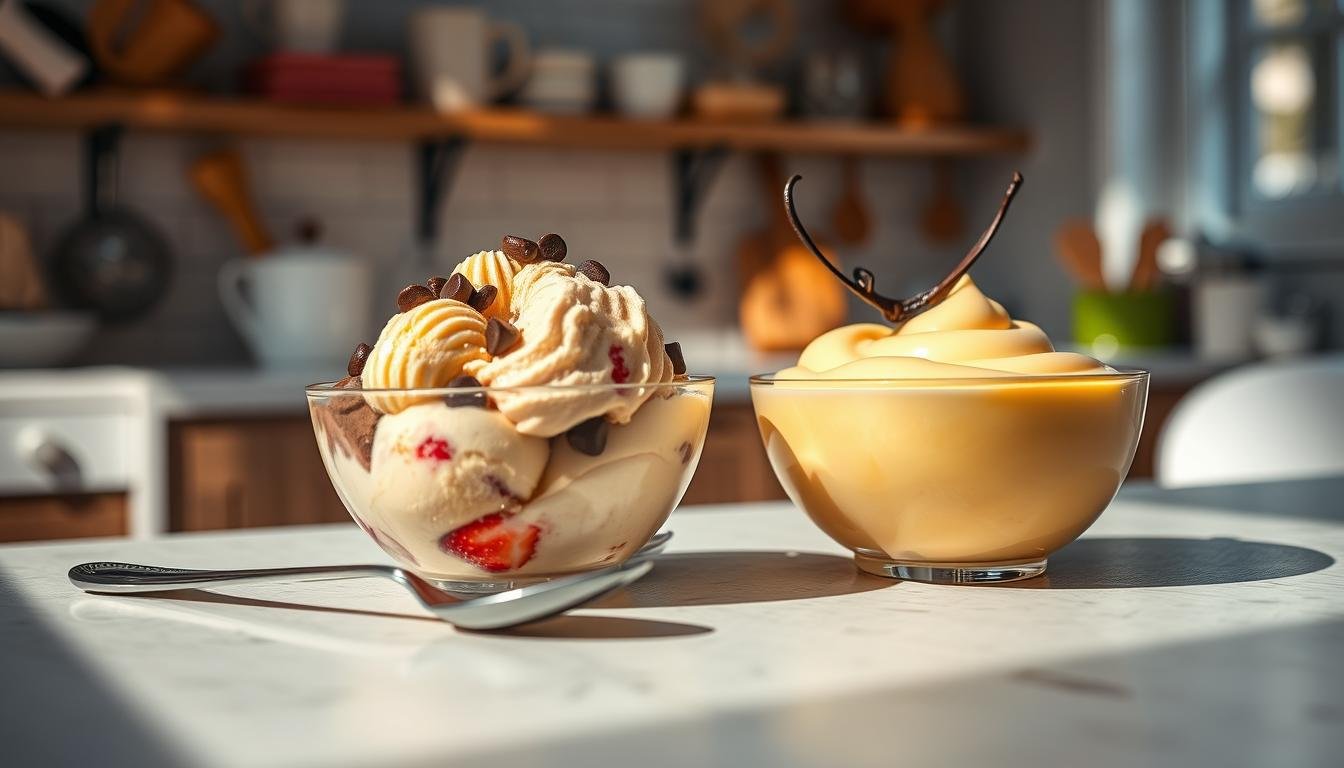
What’s The Difference Between Ice Cream And Custard
We often ask which frozen treats best match our mood. This short guide sets the stage for that choice and defines our focus: two dairy-based favorites served in cones and bowls across the United States.
We explain how a classic ice cream mix uses milk, cream, sugar, and flavorings, then is churned to trap air. That process yields a lighter body and a scoopable texture we expect at shops and stands.
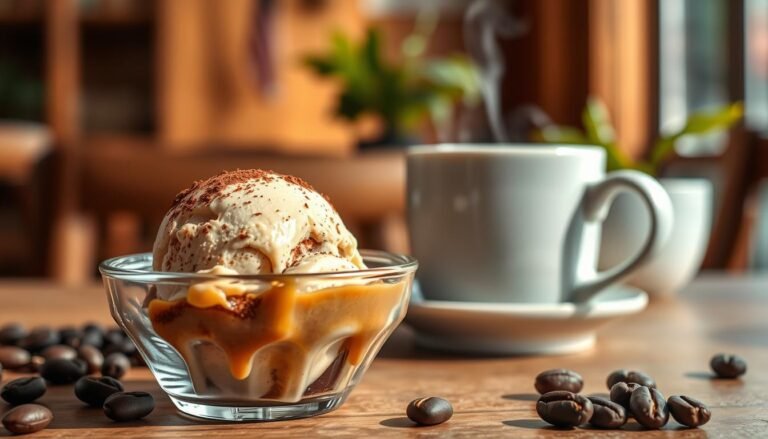
Frozen custard adds egg yolks to a similar dairy base. Producers limit air in commercial machines, so custard feels denser and silkier. It can also be served slightly warmer for an ultra-smooth mouthfeel.
Legal rules matter. In the U.S., ice cream must meet milk-fat ranges, while frozen custard must include a minimum amount of egg yolk by weight. That rule codifies the main culinary contrast.
Ahead we will cover ingredients, processing, taste and serving tips so we can choose or make the right treat at home and nail the recipe.
Ice Cream vs. Frozen Custard at a Glance: Ingredients, Texture, and Taste
A quick look at ingredients and process shows why these two popular frozen treats feel so different. We focus on what goes into each base, how machines shape body, and what to expect in the cone or cup.
What we mean by these terms
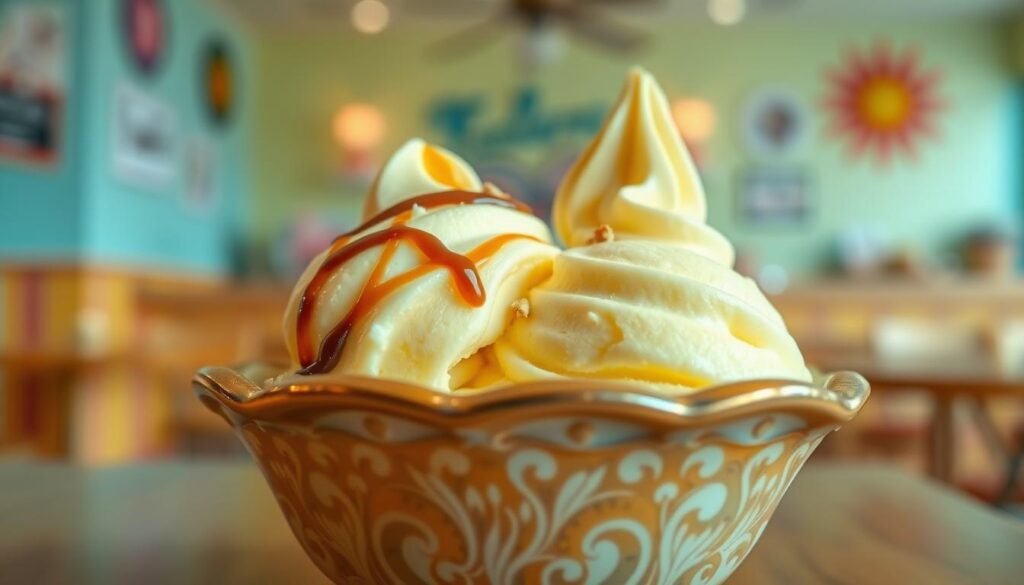
One frozen dessert uses milk, cream, sugar, and added flavorings. During freezing, pro machines whip air into the mix. That creates a lighter, scoopable bite with an airy texture.
The other adds egg yolks to a similar dairy base. U.S. rules require at least 1.4% yolks by weight. Custard machines keep air low, so the result is denser, silkier, and often served a bit warmer to boost aroma and taste.
- Ingredients drive the core contrast: yolks versus none.
- More air equals lift; less air equals density.
- Origin note: egg-enriched recipes gained traction in New York in the early 1900s.
| Feature | Churned Dessert | Egg-Enriched Dessert |
|---|---|---|
| Key ingredient | Milk, cream, sugar | Milk, cream, sugar, egg yolks |
| Air (overrun) | Higher | Lower |
| Typical mouthfeel | Light, airy | Rich, silky |
Ingredients and Standards: What Legally Sets Them Apart
Regulatory rules and ingredient lists tell us why two frozen favorites are labeled differently.
Milk, cream, and sugar: the shared dairy base
Both products start with milk, cream, and sugar. We pasteurize and blend these dairy ingredients to make a safe, uniform mix before freezing.
Egg yolks in custard: the 1.4 percent rule that changes everything
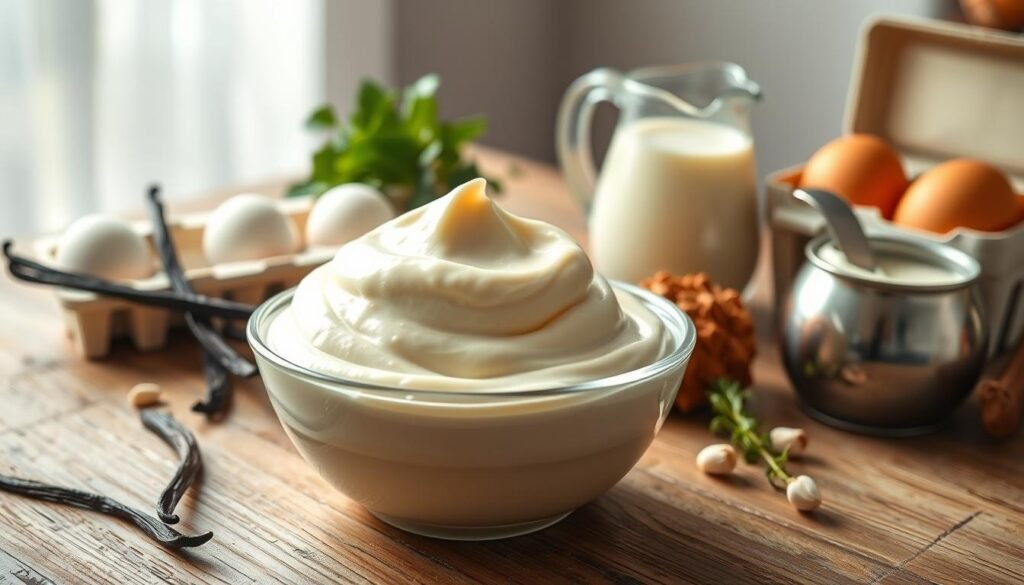
By law, frozen custard must contain at least 1.4 percent egg yolk solids by weight. That addition gives custard a silkier body.
Unless a product is frozen custard, ice cream must have under 1.4 percent yolk solids. That single threshold often defines the label.
Milk fat and overrun: why at least 10 percent fat and controlled air matter
The FDA requires at least 10 percent milk fat for both ice cream and frozen custard. Ice cream must also weigh no less than 4.5 pounds per gallon, which limits overrun.
Professional ice cream machines add air for lift. Commercial custard equipment minimizes air to keep a denser mouthfeel.
- More milk fat and yolks = smoother texture.
- Weight and overrun rules prevent inflated volume.
- Labels like “frozen dairy dessert” signal a product that may not meet these standards.
| Standard | Ice Cream | Frozen Custard |
|---|---|---|
| Milk fat | ≥ 10 percent | ≥ 10 percent |
| Egg yolk solids | ≥ 1.4 percent | |
| Typical air (overrun) | Higher | Lower |
How Processing Impacts Texture: Air, Churn, and Serving Temperature
How we churn and cool a mix decides whether a scoop is airy or velvety. Our focus here is on how air, machine design, and draw temperature shape mouthfeel for ice and cream frozen desserts. We explain practical signs to look for when choosing between lighter scoops and denser cups.
More air in ice cream, less air in custard: the density difference
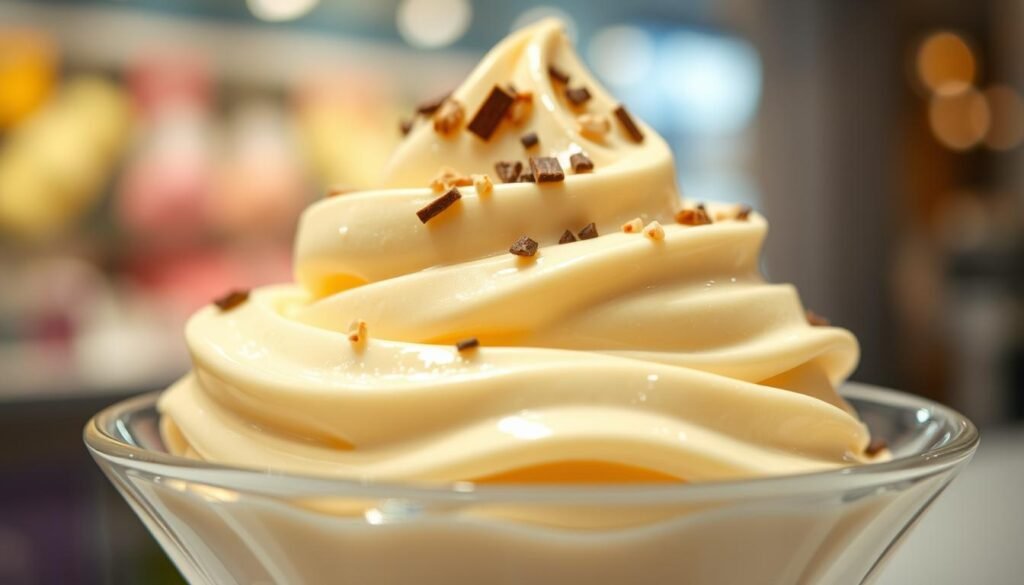
Ice cream gets intentional air during freezing. That overrun makes it lighter and easier to scoop. Commercial rules, like the minimum weight per gallon, limit how much air can inflate the product.
Frozen custard uses far less air. With less air, dairy solids and fat concentrate, so custard feels denser and richer on the palate.
Churning methods and machines that shape smoothness
Ice cream freezers inject and fold air as the mix freezes. Faster churns and certain blades trap more air pockets.
Custard machines push out a slower, thicker flow and avoid extra air. Slower churn and cold barrels promote smaller ice crystals, which improves texture.
Why custard feels silkier and can be served warmer
Egg yolk emulsifiers in frozen custard help bind fat and water. That reduces ice grittiness and yields a silk-satin finish.
Because of its structure, custard can be held at a slightly higher temperature than ice cream without losing shape. Warmer serve brings out aroma and flavor while staying firm.
- Overrun: more air = lighter ice cream; less air = dense custard.
- Machine design and churn speed control texture and ice crystal size.
- Serve temperature changes flavor perception; denser mixes tolerate warmer draws.
| Feature | Ice Cream | Frozen Custard |
|---|---|---|
| Air (overrun) | Higher | Lower |
| Typical texture | Light, airy | Dense, silky |
| Preferred draw temperature | Colder | Warmer |
Beyond the Basics: Gelato and Soft Serve Compared to Ice Cream and Custard
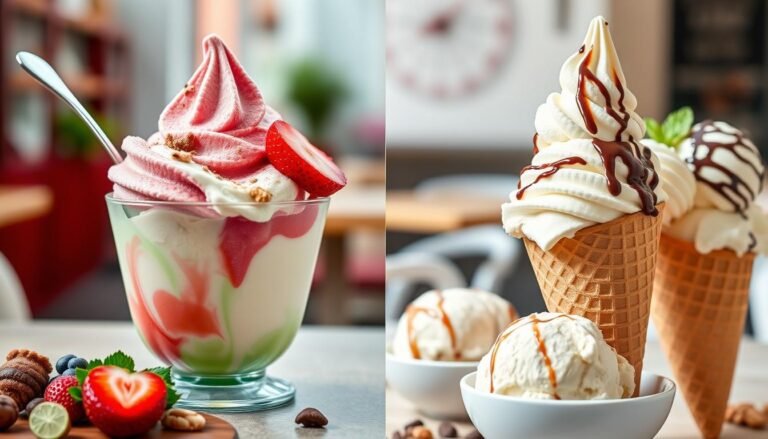
We expand our map of frozen desserts to include gelato and soft serve so we can spot where each style lands on fat, air, and serving temperature.
Gelato’s lower butterfat and minimal air for a stronger flavor experience
Gelato uses more milk and less cream than many American ice creams. Its butterfat runs roughly 4–9 percent, and makers add minimal air while churning.
Served a bit warmer, gelato lets flavors bloom. That warmer temperature and low overrun create a creamy, spreadable texture and a more intense flavor experience per spoonful.
Soft serve’s constant churn, lower fat, and immediate serve
Soft serve is churned continuously and dispensed straight from the machine. It usually has lower milk fat than hard-packed ice creams and a softer texture on the cone.
Formulas vary by chain and region; some mixes include yolks and lean toward frozen custard ice, while others stay airy like classic products. For a strong chocolate note, gelato often wins; for a playful swirl, soft serve is the pick.
| Style | Fat / Key trait | Air | Serve temp / feel |
|---|---|---|---|
| Gelato | 4–9% butterfat; more milk than cream | Low | Warmer; intense flavor, spreadable texture |
| Soft serve | Lower fat; mix-dependent | Medium–High | Cold from machine; soft, airy |
| Ice cream / Frozen custard | Higher fat (varies); custard adds yolks | Ice cream higher; custard low | Ice cream colder; custard warmer and silky |
Choosing Your Frozen Treat: How We Decide Between Ice Cream and Custard Today
Choosing a scoop often comes down to texture, temperature, and ingredients. If we want light, airy relief on a hot day, ice cream is a clear pick. If we crave rich, silky mouthfeel, frozen custard or custard ice cream answers that urge.
We read labels for milk fat and egg yolks. “Ice cream” signals at least 10% milk fat; “frozen custard” guarantees egg solids that add density. For topping-heavy sundaes at home, a loftier base carries mix-ins. For a pure chocolate or vanilla taste, cream frozen custard or gelato-like options let flavors sing.
Quick checklist: match mood (light vs. rich), scan ingredients (milk, sugar, egg), note serve temp, and pick a recipe or shop style that makes frozen treats you’ll enjoy now.