What is The Difference Between Gelato and Ice Cream
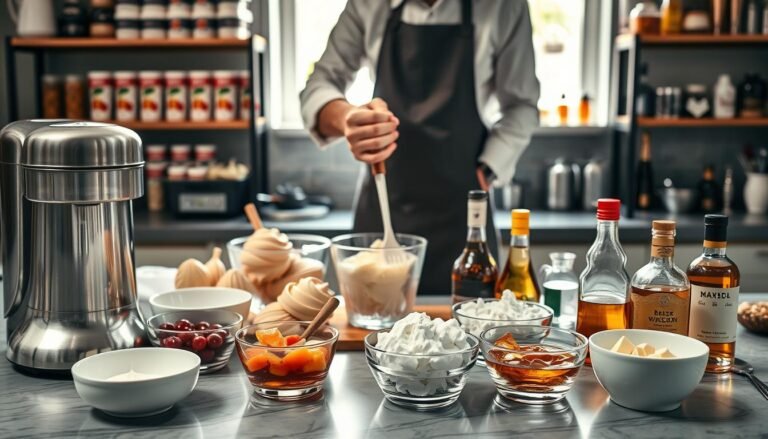
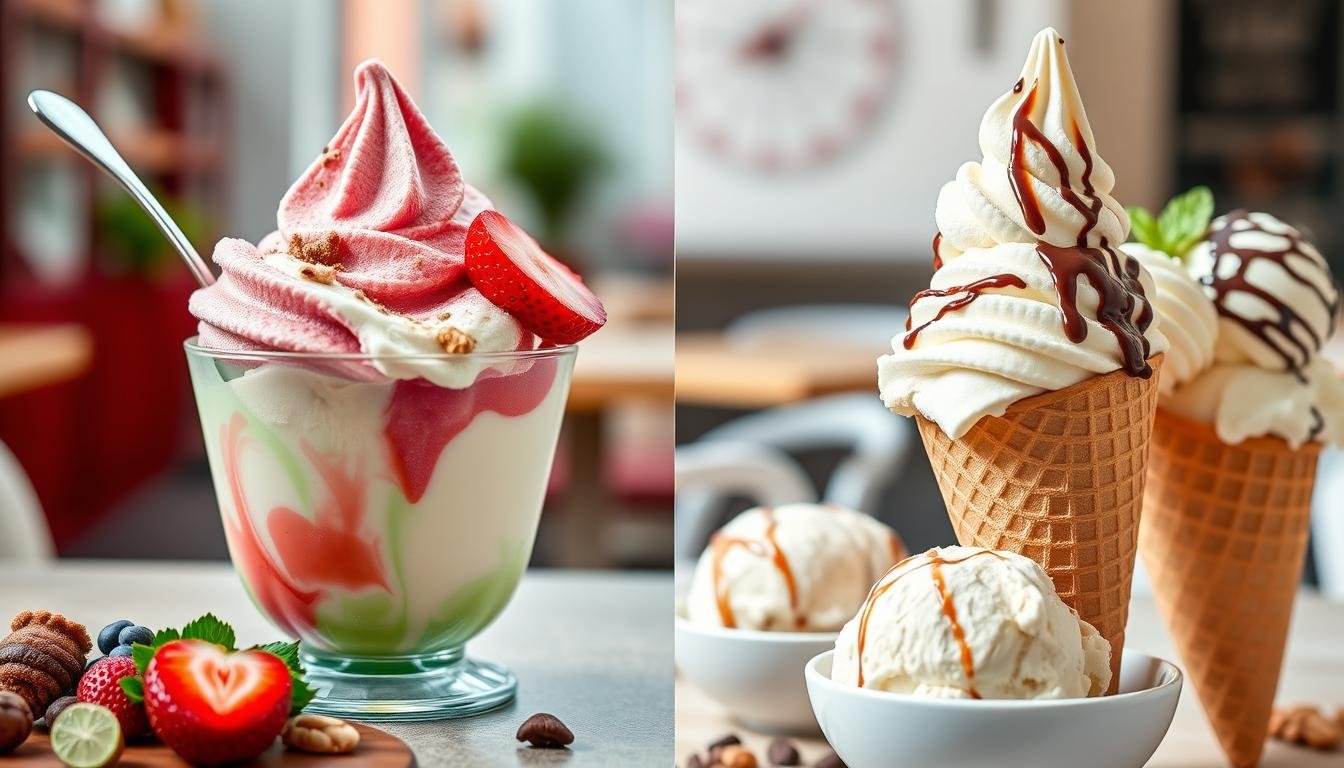
We open with a clear view of how ingredients, churning, and serving temperature shape two beloved frozen treats. Our goal is to help readers spot differences at a glance and pick a favorite with confidence.
Historically, gelato took modern form in the Renaissance, credited to Florentine chef Bernardo Buontalenti, though ancient Rome and Egypt had icy sweet precursors. Today, gelato uses more milk and less cream, with fat near 4–9% for a dense, silky mouthfeel.
By contrast, ice cream often relies on a custard base with eggs, cream, and faster churning that traps more air. That process yields a lighter, fluffier body and a richer initial richness that can affect taste as it warms on the tongue.
We preview quick checks we use at the counter: look at how the frozen mix fills the scoop, note serving temperature, and test how flavor lands. This short primer links composition to real-world enjoyment and sets up a deeper breakdown ahead.
How we tell gelato from ice cream at a glance: ingredients, fat content, and texture
At a glance we can spot differences by checking recipe, churning, and how a scoop behaves. These cues tell us about mouthfeel and flavor delivery before we taste.
Ingredients and fat content
Gelato uses more milk and less cream and often skips egg yolks. That lower fat content—roughly 4–9%—lets flavor notes pop.
Ice cream leans on richer cream and sometimes a custard base with egg yolks. Fat content typically runs higher, around 10–18%, for a fuller, creamier profile.
Churning and air
Slow churning limits air, giving gelato a dense, silky texture. Faster churning adds overrun, producing fluffier ice cream with a lighter bite.
Serving temperature and melt
Gelato is served warmer so it feels silkier and the flavor opens quickly. Ice cream is colder and firmer, and softens a bit before flavors arrive.
Counter cues we use
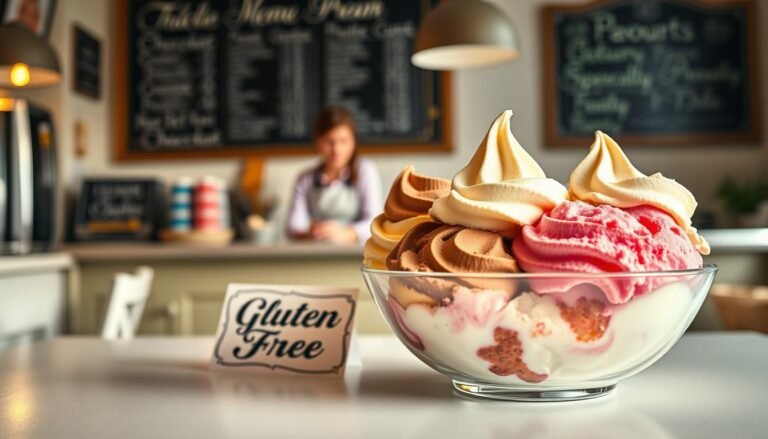
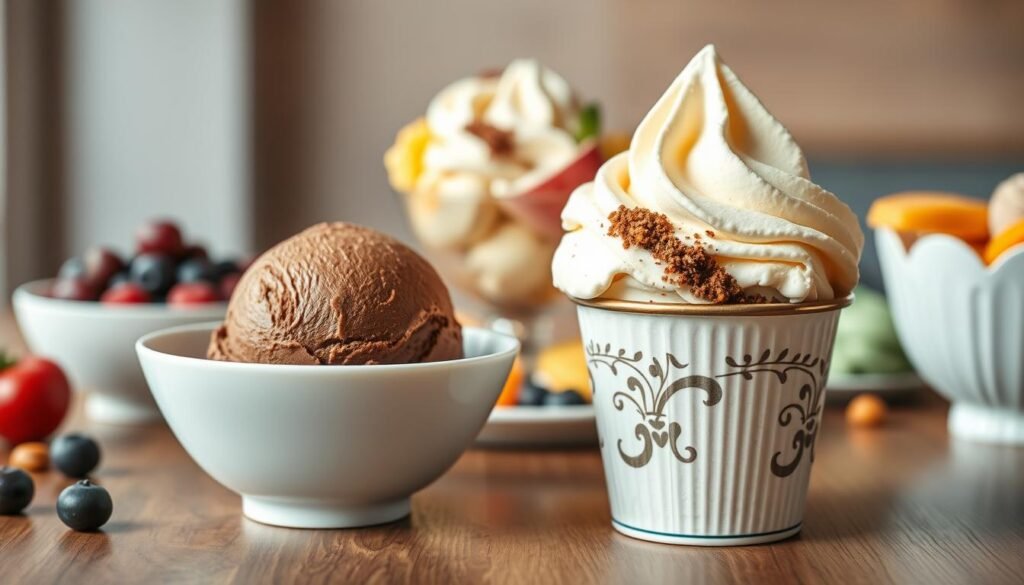
- Metal pans and flat paddles usually signal gelato.
- Domed tubs and a rounded scoop tend to indicate ice cream.
- Look for labels with lower fat content or notes about less air to expect a denser mouthfeel.
| Feature | Gelato | Ice cream |
|---|---|---|
| Fat content | 4–9% | 10–18% |
| Air (overrun) | Low | High |
| Serving temp | Warmer | Colder |
What is The Difference Between Gelato and Ice Cream: a step-by-step tasting guide
We follow a step-by-step tasting method to judge temperature, melt, and flavor delivery. This quick routine helps us separate dense, warm cups from colder, airier scoops.
Step one: check the scoop temperature and how quickly it softens
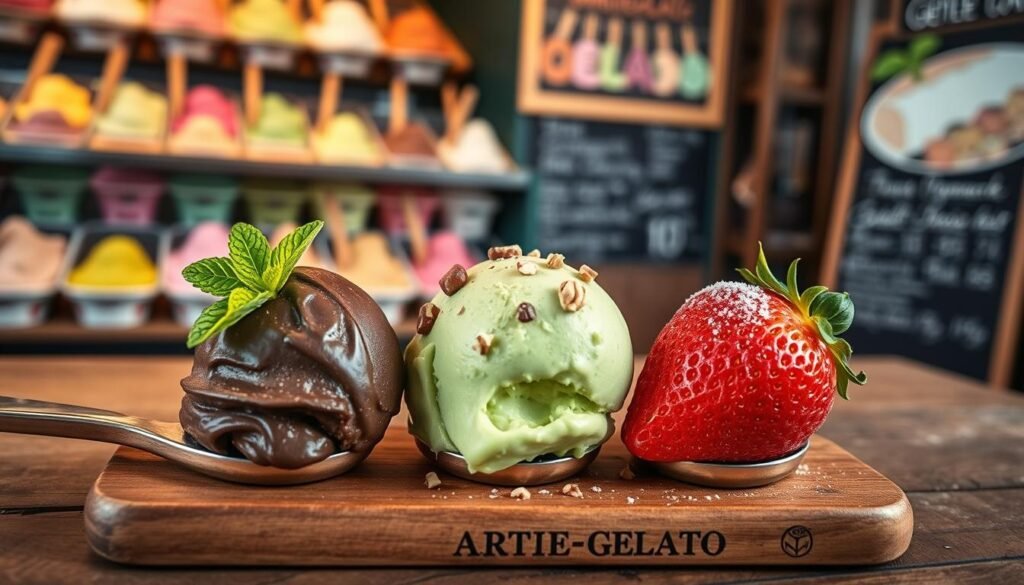
First, feel the scoop briefly. A gelato sample will register slightly warmer and soften at the edges fast. An ice cream sample stays firmer longer because it starts colder.
Step two: taste for intensity of flavor versus creamy richness
We take small bites and note how the flavor opens. Gelato often delivers concentrated notes thanks to less air and lower cream. Ice cream shows a plush, creamy richness that unfolds as it warms with time.
- Observe melt rate: silkier loosen for gelato, slower relax for ice cream.
- Compare mouthfeel: dense, fine-grained for gelato; airy then creamy for ice cream.
- Use a cup when sampling faster-melting gelato so we can re-taste cleanly.
| Check | Gelato | Ice cream |
|---|---|---|
| Serving temperature | Warmer | Colder |
| Mouthfeel | Dense, less air | Light then creamy |
| Flavor delivery | Immediate, intense | Gradual, rich |
From origins to color cues: why these frozen treats feel and taste different
Our tasting notes trace a path from ancient iced sweets to today’s counters so we can read texture, color, and smell before we taste.
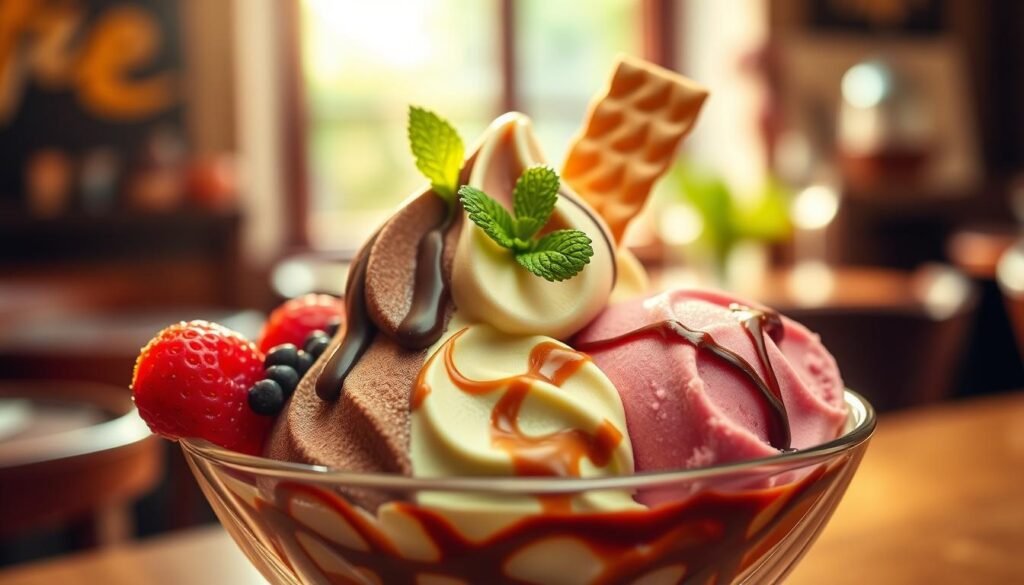
Renaissance roots that still shape flavor
Early frozen confections used ice and honey, a lineage that later met Bernardo Buontalenti’s Renaissance innovations in Florence.
Modern gelato highlights more milk and less cream, slow churning, and warmer service for a dense, immediate flavor impact.
By contrast, ice cream often uses a custard with egg yolks, faster churning, and colder service to create a lighter mouthfeel.
Natural color as a quality cue
Authentic shops favor muted, seasonal shades from real ingredients. Neon tones often signal heavy artificial color or added sugar rather than true fruit or nut content.
We judge a vendor by ingredient integrity, balanced sugar, and well-set pans of gelato ice or custard when choosing between desserts.
| Feature | Historical link | Production cue | Visual cue |
|---|---|---|---|
| Body | Renaissance gelato | More milk, slower churning | Muted, natural shades |
| Base | Custard tradition | Egg yolks, more cream | Smoother, paler tubs |
| Serving | Cold storage of ice | Warmer vs colder service | Avoid neon colors |
Your next scoop, made simple: choosing, serving, and enjoying right now
When you stand at the counter, a few quick checks make picking a scoop easy. Scan for metal tins and flat paddles for denser, warmer styles or domed tubs and a round scoop for colder, airier options.
Order small tastes to judge flavor and creamy richness. Note how fast a sample softens, then decide if you want a cup for a quick melt or a cone for a classic treat.
At home, store colder products deep in the freezer and temper briefly before serving. Read labels for fat content, lower fat or lower fat content cues, milk and sugar levels, and any egg yolks listed.
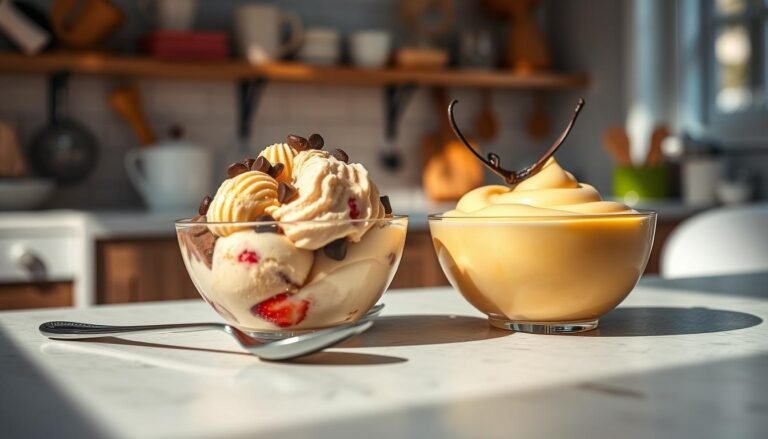
We suggest pairing bright, fruit-forward options with simple cookies, and richer creams with warm desserts. Try a side-by-side gelato ice cream comparison to feel how made milk bases, churning, and service time shape your favorite frozen treats.