Is There Caffeine in Coffee Ice Cream
We answer this directly: flavored frozen dessert made with real java usually carries some stimulant. Most makers use brewed espresso, extract, instant powder, or ground beans, so trace amounts are common unless a decaf ingredient is used.
Typical servings stay far below a cup of brewed java. For example, an 8‑ounce serving of Häagen‑Dazs measures about 38 mg, while a 12‑ounce brewed cup can reach 113–247 mg. Portion size matters; a half‑cup scoop will cut the amount roughly in half.
We will compare brands, explain how flavor is made, and list milligrams per serving. We also note low‑stimulant and decaf options, like Tillamook Coffee Almond Fudge, which registers near zero mg per serving.
Finally, we frame health guidance for U.S. adults (FDA suggests under 400 mg daily, and under 200 mg during pregnancy) so people can fit a dessert scoop into their daily intake with confidence.
What we mean by “coffee ice cream” and how the flavor is made
We define coffee ice cream as a dairy dessert where roasted bean notes are added to a milk and cream base. Makers build that taste with brewed shots, concentrated espresso, powdered extract, instant blends, or by steeping whole beans.
Common sources
Typical sources include whole or cracked coffee beans, ground coffee steeped in hot milk, brewed coffee folded into custard, espresso reductions, and instant powder or extract. Even extracts come from real beans and often keep stimulant traces unless labeled decaf.
Why most pints contain at least trace amounts
When a product lists coffee or extract, it usually contains caffeine by default. Producers balance taste and texture: brewed coffee adds water, espresso adds intensity with less dilution, and instant mixes smoothly with dairy fats.
| Source | Flavor effect | Caffeine impact |
|---|---|---|
| Brewed coffee | Bright, diluted aroma | Moderate amounts |
| Espresso | Strong, concentrated taste | Variable; can be reduced |
| Instant / extract | Smooth, stable flavor | Usually contains trace levels |
Is There Caffeine in Coffee Ice Cream
Most commercial coffee ice cream carries some stimulant because makers use brewed shots, espresso, extracts, or ground beans. We answer plainly: the vast majority contain at least trace amounts, since the flavoring comes from real bean ingredients.
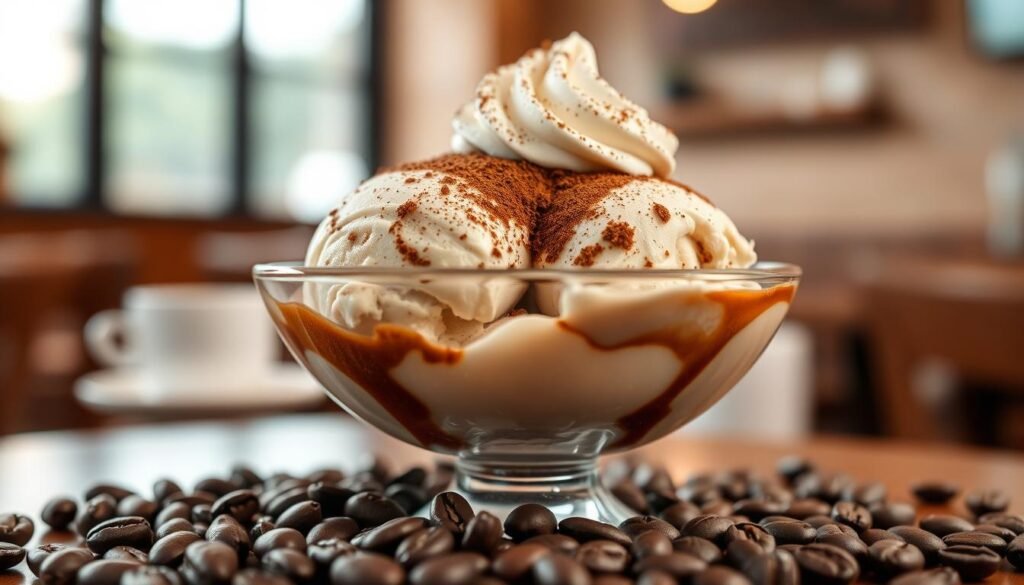
Exceptions exist. Some brands use decaffeinated sources so the product contains virtually no stimulant per serving. Tillamook Coffee Almond Fudge is a common example of an option with negligible content.
- Rule of thumb: if the ingredient list lists coffee or espresso without “decaf,” expect some stimulant.
- Levels vary widely — from a few milligrams per half‑cup up to amounts that approach a small portion of brewed coffee for espresso‑forward recipes.
- Serving size matters: a half‑cup scoop and two scoops will change how much you ingest.
| Factor | Typical impact | Action |
|---|---|---|
| Ingredient listed as coffee | Contains measurable stimulant | Read label / FAQ |
| Decaf ingredient | Nearly zero content | Safe for late‑night treats |
| Serving size | Alters total mg | Start small if sensitive |
Storage or melting does not reduce stimulant; the compound stays stable. If late‑night sleep is a concern, choose decaf options or limit portions. Our next section compares a scoop to a cup of brewed coffee for context.
How much caffeine is in a scoop compared to a cup of coffee
Understanding how a scoop stacks up against a brewed cup helps us estimate daily intake from dessert. A standard serving for many brands equals about 1/2 cup, which we treat as one scoop.
Two scoops usually equal roughly 1 cup, or about 8 ounces. By contrast, a typical 12‑ounce cup coffee ranges from about 113 to 247 mg per cup, depending on beans and brew method.
- Half‑cup (one scoop): most brands show 3–47.5 mg per serving.
- One cup (two scoops, ~8 oz): roughly double the half‑cup amount; Häagen‑Dazs 8 oz ≈ 38 mg.
- Compare: an 8‑ounce mug of brewed drink still usually delivers far more than a dessert scoop.
| Serving | Typical mg | Everyday comparison |
|---|---|---|
| 1/2 cup (1 scoop) | 3–47.5 mg | Closer to green tea than a mug |
| 1 cup (2 scoops) | 6–95 mg | Still often below a 12‑oz mug |
| 12‑oz brewed cup | 113–247 mg | Typical morning strength |
If you eat more than two scoops, multiply the amount per half‑cup to estimate total content. Sweetness, fat, and temperature change taste, not the actual content. We include a brand breakdown next so readers can check specific labels.
Caffeine content by coffee ice cream brand
Below we compare measured amounts per half‑cup across well‑known frozen dessert brands. The list helps you pick a pint that fits your evening plans or daily totals.
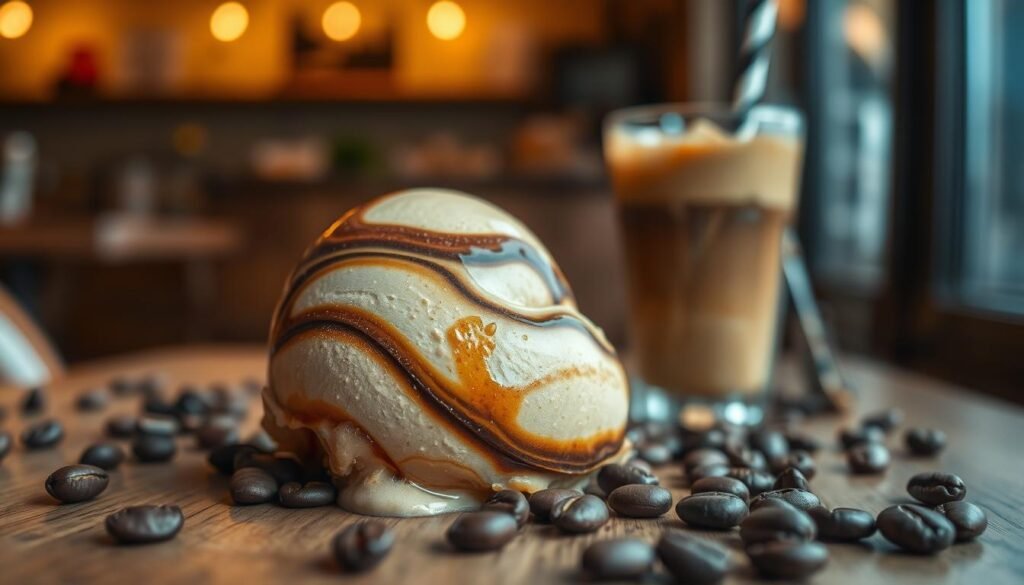
Häagen‑Dazs Coffee
About 21.6 mg per 1/2 cup. A midrange option with clear roast flavor and moderate stimulant.
Ben & Jerry’s — Coffee, Coffee BuzzBuzzBuzz!
Roughly 45 mg per 1/2 cup. One of the stronger mass‑market choices.
McConnell’s Coffee
Around 47.5 mg per 1/2 cup. Sturdy flavor and higher measured amount per scoop.
Turkey Hill Colombian Coffee
About 11 mg per 1/2 cup. A milder, low‑amount pick among national brands.
Tillamook Coffee Almond Fudge
Approximately 5.4 mg per 1/2 cup and the brand notes it effectively rounds to 0 mg per serving.
Trader Joe’s Coffee Bean Blast
Roughly 3–5 mg per 1/2 cup. One of the lowest published amounts for a mainstream label.
Graeter’s Vienna Coffee
Strong flavor; exact milligrams not listed. We advise caution if you are sensitive.
Adirondack High Peak Perk
Espresso‑infused and potentially very high—estimates up to about 100 mg per 1/2 cup based on recipe claims.
| Brand | Per 1/2 cup (mg) | Profile | Notes |
|---|---|---|---|
| Häagen‑Dazs | 21.6 | Balanced roast | Moderate content |
| Ben & Jerry’s | 45 | Bold, mix‑ins | Higher than many |
| McConnell’s | 47.5 | Rich flavor | One of the highest listed |
| Turkey Hill | 11 | Mild | Lower‑amount option |
| Tillamook | 5.4 | Decaf‑leaning | Effectively ~0 mg per serving |
| Trader Joe’s | 3–5 | Very mild | Good low‑amount pick |
| Graeter’s | Not listed | Strong | May exceed 50 mg |
| Adirondack | Up to ~100 | Espresso‑forward | High; sample small first |
- Mix‑ins like chocolate chunks or espresso swirls can add small extra milligrams.
- Darker roasts or espresso styles often mean stronger taste and higher amounts unless decaf is used.
- We recommend checking brand sites before buying, since formulations and seasonal lines change.
What affects caffeine levels in coffee ice cream
What we use and how we brew largely controls how strong a dessert scoop will be. Small choices in beans, extraction, and ratios change the final amount per half‑cup.
Bean species and brew method
Robusta beans carry roughly twice the stimulant of arabica, so a robusta forward base raises levels. Espresso concentrates more solids per volume, which can boost milligrams per scoop compared with drip if the recipe ratios match.
Recipe ratios and extraction
A double shot (about 150 mg) folded into 2 cups of base yields roughly 37.5 mg per 1/2 cup. Stronger pulls or longer steeps extract more of the compound into custard.
- Drip can be milder but reductions may concentrate potency.
- Instant coffee gives predictable potency per gram for consistent batches.
- Extracts usually carry stimulant unless labeled decaf.
| Factor | Effect on levels | Action |
|---|---|---|
| Bean type | Robusta > Arabica | Choose decaf or arabica for lower |
| Espresso vs drip | Espresso concentrates per volume | Adjust shot count |
| Recipe ratio | More liquid coffee = higher amount | Pilot small batches |
| Dairy fat | No reduction of stimulant | Use for texture only |
Will coffee ice cream keep us awake at night
Whether a spoonful keeps you up depends largely on personal sensitivity and timing. Many people can enjoy a small serving before bed with no trouble because the dessert usually has far less stimulant than a cup of brewed coffee.
Still, some people notice alertness from tiny amounts, even from chocolate or tea. Sugar can amplify that effect for certain individuals, especially when eaten close to bedtime.
Caffeine sensitivity differences and the role of sugar
We recommend avoiding late scoops if sleep is easily disrupted. Try an afternoon treat instead to align with your natural rhythms.
- Cut afternoon and evening stimulant sources like soda or a second cup to test impact.
- Keep screens off before bed, stick to a schedule, and add a short relaxation routine.
- Choose low‑amount or decaf versions if you are a sensitive caffeine sleeper.
If sleep problems persist despite timing and diet changes, consult a healthcare provider. Also remember to count total daily content from all sources when planning dessert.
Decaf and low-caffeine coffee ice cream options
For anyone avoiding a late-night lift, we highlight supermarket pints that deliver roast flavor with minimal stimulant. Our picks make it easy to enjoy dessert while keeping total intake low.
Store-bought picks
We recommend three reliable choices: Tillamook Coffee Almond Fudge, Straus Family Creamery Organic Coffee, and Nightfood Cold Brew Decaf. Each is formulated or labeled to minimize stimulant per serving.
- Tillamook Coffee Almond Fudge — listed as effectively ~0 mg per half‑cup.
- Straus Family Creamery Organic Coffee — sold as a decaf option with no measurable stimulant.
- Nightfood Cold Brew Decaf — formulated for sleep-friendly dessert and labeled caffeine-free.
Choosing labels and flavors that minimize stimulant
Scan ingredient lists and brand FAQs for the word “decaf” or explicit statements on content per half‑cup. Portion control is a simple lever: smaller servings reduce total content and often create an essentially decaf experience.
| Brand | Per 1/2 cup (mg) | Notes |
|---|---|---|
| Tillamook | ~0 | Effectively decaf; good supermarket pick |
| Straus Family Creamery | 0 | Organic decaf option |
| Nightfood | 0 | Cold brew decaf; sleep-friendly |
Watch for add-ins like espresso swirls or chocolate, which can reintroduce small amounts. We advise keeping a shortlist of preferred low‑amount brands and testing sensitivity earlier in the day before relying on a scoop at night.
Homemade control: dialing caffeine up or down in your recipe
Homemade batches let us tune roast strength and extract so the final scoop hits our target. Small swaps let us keep aroma while cutting stimulant levels.
Using decaf beans, espresso, or brewed coffee for near-zero caffeine
Choose decaf beans or decaf espresso to reach near-zero amounts without losing roast notes. Instant decaf is consistent and helps avoid over‑extraction that causes bitterness.
Typical homemade ranges and how robusta or extra shots change the amount
A common baseline: a double shot (~150 mg) folded into 2 cups of base yields about 37.5 mg per 1/2 cup serving. Using robusta or extra shots can double that amount per scoop.
Simple path to a decaf custard base
Brew decaf, warm milk with the brew, temper egg yolks, stir in cream, chill, churn, and freeze. Concentrate brewed decaf to keep richness while limiting total stimulant.
| Approach | Expected mg/½ cup | Flavor impact | Notes |
|---|---|---|---|
| Decaf beans / instant | ~0 | Soft, aromatic | Best for late treats |
| Double shot per 2 cups | ~37.5 | Pronounced roast | Similar to soda range |
| Robusta or extra shot | Up to double | Stronger, bitter risk | Test small batches |
We advise tasting before churning and logging grams, shots, and yields. Swap vanilla or caramel for chocolate when aiming for minimal stimulant while keeping great flavor.
Smart intake: daily limits, pregnancy, and kids in the United States
We lay out clear daily limits and simple rules so families can enjoy dessert without guesswork.
FDA guidance for healthy adults recommends keeping total stimulant intake under 400 mg per day. A typical adult serving of coffee ice cream often ranges 20–40 mg, so one scoop usually fits well within that cap.
Pregnancy guidance asks people to stay under 200 mg daily. One or two small scoops of a low‑amount pint will normally stay inside that limit, but we advise tracking all sources and choosing decaf or labeled low‑content brands when unsure.
For kids, a child‑size portion typically delivers about 10–20 mg. That is less than half the amount found in a 12‑oz soda, so dessert portions tend to be modest compared with sugary drinks.
| Group | Recommended daily limit | Typical serving impact |
|---|---|---|
| Adults | <400 mg | 1 scoop ≈ 20–40 mg; fits the limit |
| Pregnant people | <200 mg | 1–2 small scoops of low‑amount brands usually safe |
| Children | No formal RDA; keep low | Child portion ≈10–20 mg; less than half a 12‑oz soda |
We recommend counting totals from morning cup coffee, tea, soda, and dessert. Check brand numbers before buying, limit evening servings, and consult a healthcare provider if you have health conditions or medication concerns.
The best time to enjoy coffee ice cream without losing sleep
Picking when to enjoy a scoop can make the difference between a pleasant treat and a restless night. Many people eat a small serving after dinner with no trouble, but habits and sensitivity vary.
Afternoon treats versus late-night scoops
We recommend the afternoon as the safest window to enjoy coffee ice cream. That gives the body more time to clear stimulant content before bedtime.
On weeknights, choose an earlier dessert. On weekends, a later scoop may be fine if sleep the next day is flexible.
Portion control for sensitive sleepers
Start with a half-cup scoop and note how you feel. Smaller portions reduce total stimulant and let the flavor satisfy without excess impact.
Simple flavors are better late in the day. Chocolate mix-ins can add small extra stimulant and sugar that may boost alertness.
- Stop stimulant sources in the late afternoon when testing timing.
- Keep a decaf or low‑amount pint for evening cravings to avoid guesswork.
- Use a screen‑free wind‑down with dim lights to improve sleep after dessert.
| Time | Impact on sleep | Suggested action |
|---|---|---|
| Early afternoon | Low risk | Enjoy a regular scoop |
| Late afternoon | Moderate risk for sensitive people | Try half a scoop or decaf |
| Evening / late-night | Higher risk | Avoid or pick labeled low‑amount pint |
| Weekend flexibility | Low to moderate | Test later treat if next‑day rest is free |
Our take on coffee ice cream and caffeine today
To close, we offer a clear snapshot of amounts across labels and simple rules to match a scoop to your day. Most coffee ice cream falls between about 3–47.5 mg per 1/2 cup, with espresso-forward outliers near 100 mg. Decaf picks like Tillamook and Straus sit near zero.
Choose a brand, read the label or FAQ, and note the content per serving. Homemade batches give the best control over the exact amount, from robusta‑rich recipes to near‑zero decaf custards.
Keep U.S. guidance in mind: under 400 mg daily for adults and under 200 mg during pregnancy. Prefer afternoon treats or small portions at night if mild stimulation affects sleep. With a short list of go‑to pints and mindful portions, we can enjoy the flavor and keep totals in check.