Difference Between Alcoholic Ice Cream And Regular Ice Cream
We introduce how adding spirits changes how frozen desserts set and taste. Alcohol alters how ice forms, how cream behaves, and how a pint holds shape, so we set clear expectations for flavor, texture, and performance.
A small amount of alcohol can add depth without ruining scoopability. Ethanol lowers the freezing point far more than sugar, so a boozy base needs careful water and fat balance to avoid a melty, soft result.
We’ll outline practical limits, why bold rums or whiskies give more flavor per ounce, and how to tweak the base to keep ice crystal size small. Our guide will help home cooks and pros plan when to add spirit, how much to use, and how to preserve a stable, flavorful ice cream profile.
What we’ll help you do in this How-To Guide
We’ll show you practical rules so your boozy frozen desserts freeze and scoop predictably.
For a quart of mix, we use one firm threshold: keep 80‑proof spirit under five to six tablespoons to preserve a firm freeze. We also explain why adding spirit at soft‑serve stage (≈ -5°C / 23°F) helps create finer ice crystals and a smoother final texture.
Over the course of this guide we help you set targets and tweak the base. You’ll learn to balance sugars, fat, and stabilizers so the ice cream holds on the scoop without relying only on the freezer.
- Understand freezing point shifts and set a safe alcohol content target.
- Adjust ingredients in the base to counter softness and control texture.
- Choose spirits and flavor methods that maximize taste with minimal booze.
- Time spirit addition for finer crystals and learn practical freezer strategies.
- Use a simple checklist for ingredients, equipment, and setup before you churn.
We keep each step compact and practical so you can craft reliably scoopable pints at home or in a small shop.
Difference Between Alcoholic Ice Cream And Regular Ice Cream: science, texture, and ABV at a glance
We look at how ethanol changes hardening, melting, and the way a pint performs in a home freezer.
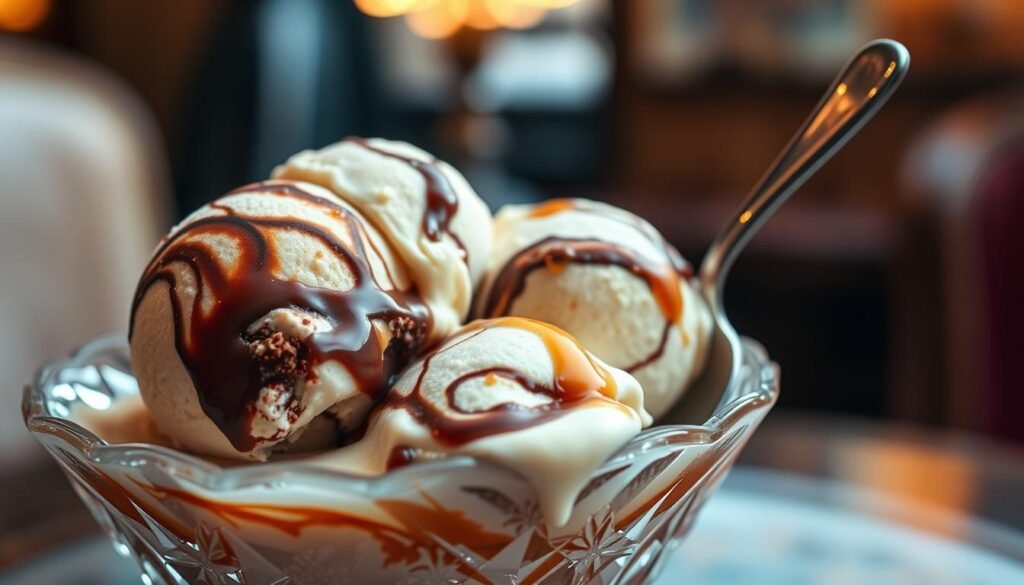
Freezing point vs. melting point: Ethanol depresses the freezing point far more than table sugar by weight. That lowers the temperature where ice and cream solidify and increases the unfrozen syrup fraction around fat and ice crystals.
Freezing point vs. melting point: how ethanol changes ice, cream, and the scoop
Adding alcohol raises the liquid phase, so a churned mix stays softer and scoops easier at service temperature. But the lower melt point means faster melting and more refreeze cycles in the freezer.
Texture trade-offs: softer, more scoopable—yet potentially icier over time
Alcohol increases the syrup around air cells, changing how air and cream hold structure. Softer at first does not guarantee smoothness after storage; recrystallization can make the texture grainy.
How much alcohol is too much? Practical limits from kitchen tests and pro makers
- Work within ~30g ethanol per 1,000g base (~3% by weight).
- Many kitchens cap 80‑proof spirits at five to six tablespoons per quart to ensure it sets.
- Neutral spirits add softness with little flavor; bold spirits give taste without extra alcohol.
How we adjust an ice cream base when adding alcohol
When we add spirits to a frozen mix, the base needs deliberate reformulation to stay scoopable.
We start by reworking sugars. We often eliminate dextrose, nudge sucrose slightly higher for balance, and keep about 10% trimoline (invert syrup) to preserve softness without excess freezing point depression.
Next we boost solid content. Raising nonfat milk solids toward 12% helps structure. We also increase locust bean gum by roughly 20–25% to reduce icy defects while keeping a clean mouthfeel.
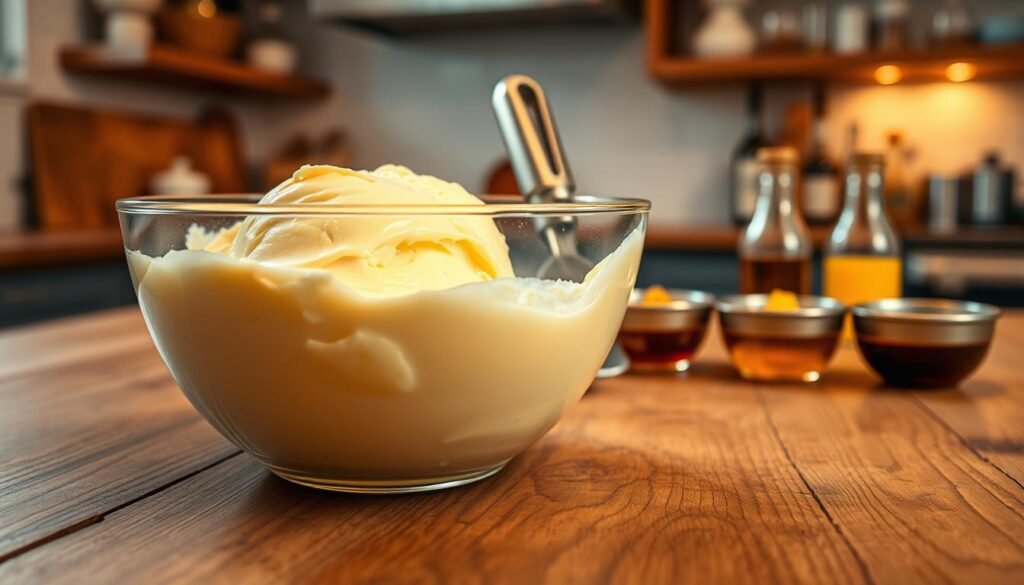
Sensible alcohol management and timing
We cap total ethanol near 30g per 1,000g base. For delicate spirits or wines we simmer a portion to concentrate flavor while lowering alcohol.
We add booze during churn at soft‑serve temperature (≈ -5°C / 23°F). That timing helps nucleation and yields finer ice crystals and a clearer profile.
- Reduce or remove dextrose; balance sucrose + 10% trimoline.
- Hold nonfat milk solids ~12% and up locust bean gum 20–25%.
- Split or reduce alcohol by simmering to preserve flavor without excess softening.
- Add spirits at soft‑serve draw for better texture and flavor clarity.
- Choose bold rums, whiskies, or liqueurs for flavor impact at lower dosing.
| Adjustment | Target | Why it matters |
|---|---|---|
| Sucrose / Invert syrup | Sucrose modest + 10% trimoline | Controls sweetness and syrup fraction to limit over‑softening |
| Nonfat milk solids | ~12% of mix | Builds structure so ice and air distribute evenly |
| Locust bean gum | Increase 20–25% | Improves body and reduces icy recrystallization |
| Alcohol limit | ~30g pure alcohol / 1000g | Keeps the finished product scoopable in a home freezer |
Flavor building like a cocktail: from vanilla bean and Scotch to tequila-lime
We treat flavor building like a bartender, dialing spirits and aromatics so each scoop reads like a balanced cocktail.
Small amounts of spirit boost aroma and depth without wrecking texture. A tablespoon or two of whiskey will lift a good vanilla into a smoky vanilla bean profile.
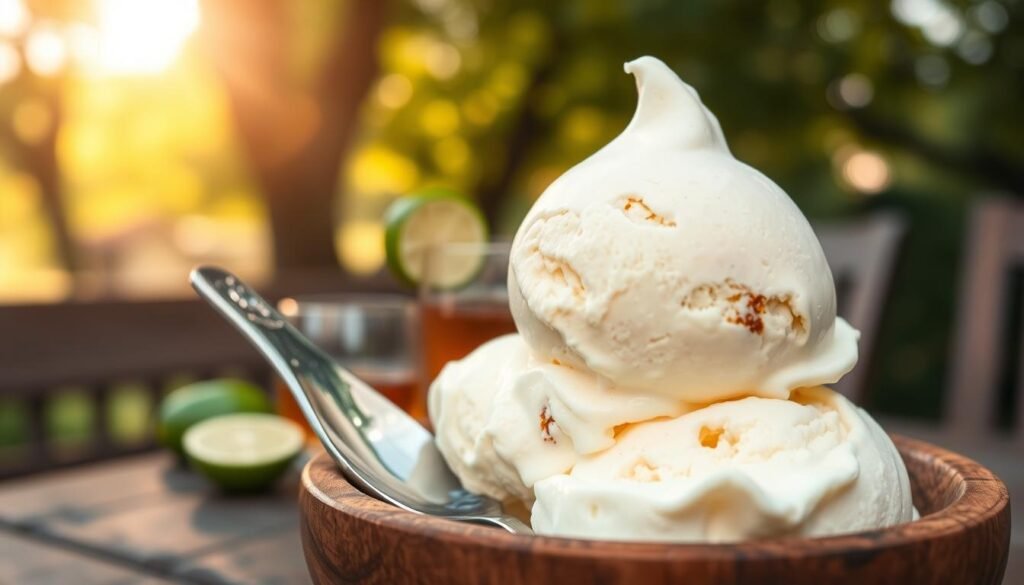
Single-spirit scoops
Scotch with vanilla, Irish coffee with shaved dark chocolate, and classic rum raisin all start with measured doses. Macerate raisins in a portion of rum to keep pockets of flavor and texture.
Cocktail-inspired builds
We translate cocktails by matching spirit ratios. For a Manhattan note, try four tablespoons rye plus one tablespoon sweet vermouth in a quart of base. Sweeter riffs like Old Fashioned or tiki styles adapt best.
Beer, wine, and preservation
Reduce beer or wine over low heat to concentrate taste and lower water, then add a splash of fresh product to recover aromatics. Mulled wine works well reduced to a syrup before mixing into cream.
Pairing and mix-ins
Keep air and chunk size controlled so mix-ins don’t create ice pockets. Use candied citrus, dark chocolate shards, or macerated fruit to add bursts of flavor while protecting structure.
| Style | Example | Spirit dose | Why it works |
|---|---|---|---|
| Single-spirit | Scotch vanilla bean | 1–2 tbsp whiskey per quart | Adds smoke and lifts vanilla without softening base |
| Cocktail riff | Manhattan ice cream | 4 tbsp rye + 1 tbsp vermouth | Balances sweet, bitter, and spirit notes for depth |
| Wine/beer | Mulled wine | Reduce 2 cups to syrup, add small fresh splash | Concentrates aroma, limits extra water in mix |
Choosing and serving boozy ice cream vs. regular in the United States
Picking the right boozy scoop starts with label reading and ends with tempering at the right serving point. We must spot whether a pint lists a measurable ABV or simply uses spirit flavors with no alcohol. That distinction affects storage, service, and legal sale.
Reading labels and ABV: from alcohol-infused ice cream to spirit-flavored pints
Read labels for declared alcohol content and serving ABV. Some products note percent ABV; others call out spirit or wine reduction with no measurable ethanol. Brands like Tipsy Scoop publish ABV (up to 5%) and milk fat, while BuzzBar lists 2.05–3.9% per 100 ml serving.
State-by-state rules: licensing, where it’s sold, and what that means for us
Federally, the TTB can classify certain products as non‑beverage foods. State and county rules vary. New Jersey may require retailer licenses for boozy pints. Georgia has county-level differences. That changes placement and who can stock products in a store.
Storage, scoopability, and ideal serving temperatures for each style
Hardening calls for very cold freezers (-5°F / -20°C or lower). Boozy styles need tempering to about 6–10°F for best scoopability because the lower freezing point melts faster at service. We keep portions small and plate quickly to protect texture.
- Spot ABV and declared flavors to predict firmness and melting speed.
- Lower overrun helps maintain body for a tipsy scoop at service temperature.
- Manage water and air to reduce refreeze damage in home freezers.
- Transport in insulated carriers and temper before serving for ideal texture.
| Factor | Boozy pints | Regular pints |
|---|---|---|
| Typical ABV | 1–5% declared or labeled | 0% (spirit-flavored only) |
| Freezer temp | -20°C / -5°F (store); 6–10°F (serve) | -20°C / -5°F (store); 0–5°F (serve) |
| Handling | License and placement may apply | Standard grocery placement |
Market trends and who it’s for: super-premium, social-first, and seasonal flavors
We track how market shifts are turning boozy pints into a premium, social-first category. The alcohol-infused niche is roughly a $1.5 billion global market, growing about 6–7.2% CAGR as brands lean on craft partners and seasonal drops.
Why 5% ABV “tipsy” scoops are booming
At near‑5% ABV, a tipsy scoop pairs lush fat with scoopable texture. Brands such as Tipsy Scoop use ~16% milk fat to create a creamy mouthfeel that photographs well and holds up in service.
That profile sells higher price points and suits on‑premise events where presentation matters. Beer and wine themes, plus tequila riffs, keep seasonal launches fresh.
Who’s buying and how brands reach them
Core buyers are urban Millennials and Gen Xers seeking craft experiences. They buy giftable packs, order at bars, or grab bars at events where BuzzBar’s 2–3.9% formats perform well.
- Collaborations with spirits and bars drive limited flavors and urgency.
- Distribution skips some retailers due to regulatory hurdles, so D2C and pop-ups matter.
- Sorbets and richer ice creams target different occasions and tastes.
| Brand | ABV | Positioning |
|---|---|---|
| Tipsy Scoop | Up to 5% | Super‑premium, high fat |
| BuzzBar | 2.05–3.9% | Event, on‑premise bars |
| Craft collab | Varies | Seasonal, limited drops |
How to pick the right ice cream for your needs today
Match label details—ABV, milk fat, and listed ingredients—to your serving plan for predictable results. Choose boozy ice cream with declared ABV near 5% if you want a softer scoop; plan colder freezer storage and a short temper before serving.
Favor bolder spirit profiles—whiskey, rum, or tequila—so flavor comes from spirit, not added booze. Look for high milk fat formulas (super‑premium examples use ~16% milk) and clear notes on stabilizers in the base.
For menus, pick vanilla or vanilla bean with a touch of whiskey, dark chocolate accents, or rum raisin for wide appeal. Use wine or beer reductions to concentrate fruit or malt without excess water. Opt for sorbet or lower‑fat options when dairy richness is not desired.
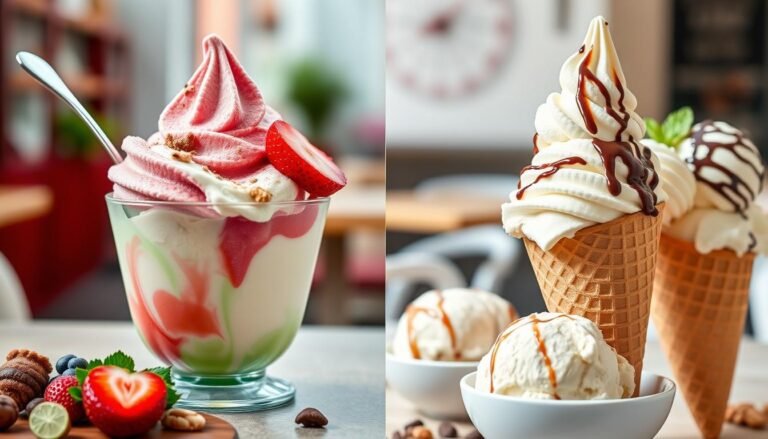
Our quick checklist: confirm ABV, verify fat and ingredients, reserve freezer space, and time scooping so texture and air hold at service. For cocktail events choose alcohol ice cream; for family settings pick regular ice creams; for mixed crowds use hybrid, lower‑ABV pints.