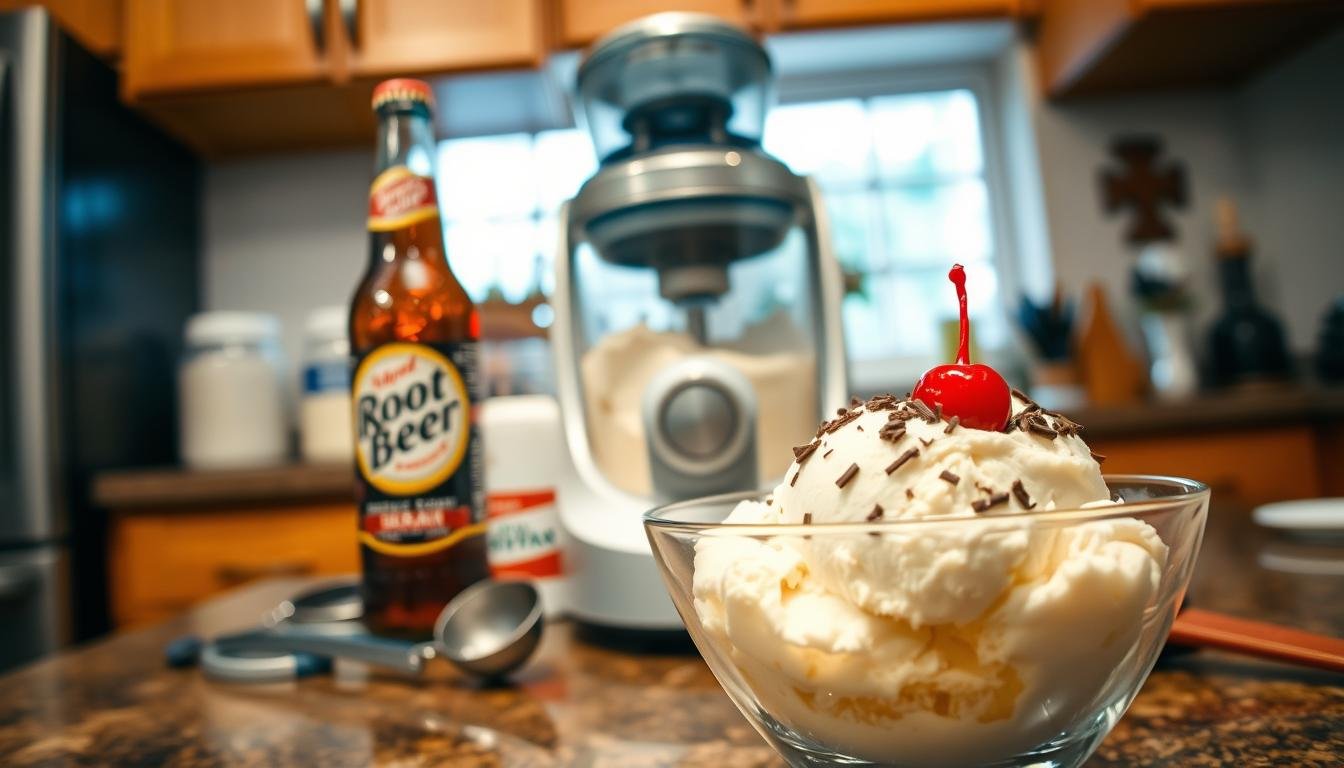
How To Make Root Beer Ice Cream
We offer three tested paths for a classic soda-fountain dessert: an extract base for bold flavor, a decarbonated soda method for a light float-like result, and a syrup route for a sweet shop profile. Each choice balances cream and milk so we avoid icy pockets and keep a smooth mouthfeel.
Our brief covers ingredients, step-by-step churning, and chill and freeze planning. Expect quick prep, about 20–30 minutes of churn time, then 2–4 hours or overnight for firm scoops. A reliable ice cream maker and airtight container make a big difference in texture.
We also preview serving ideas — cones, bowls, and float glasses paired with vanilla ice cream — plus simple pro tips that stop foam and protect flavor. The notes include tested ratios and a short nutrition snapshot with calories, fat, and iron so our recipe is repeatable and safe for guests.
Why we love this creamy, soda-fountain classic at home
Capturing the fizz-and-vanilla memory of a soda counter in a bowl is why we churn this flavor at home. The finished scoop echoes the brown cow—vanilla folded through a bubbly soda profile—without dealing with melting cups or sticky fingers.
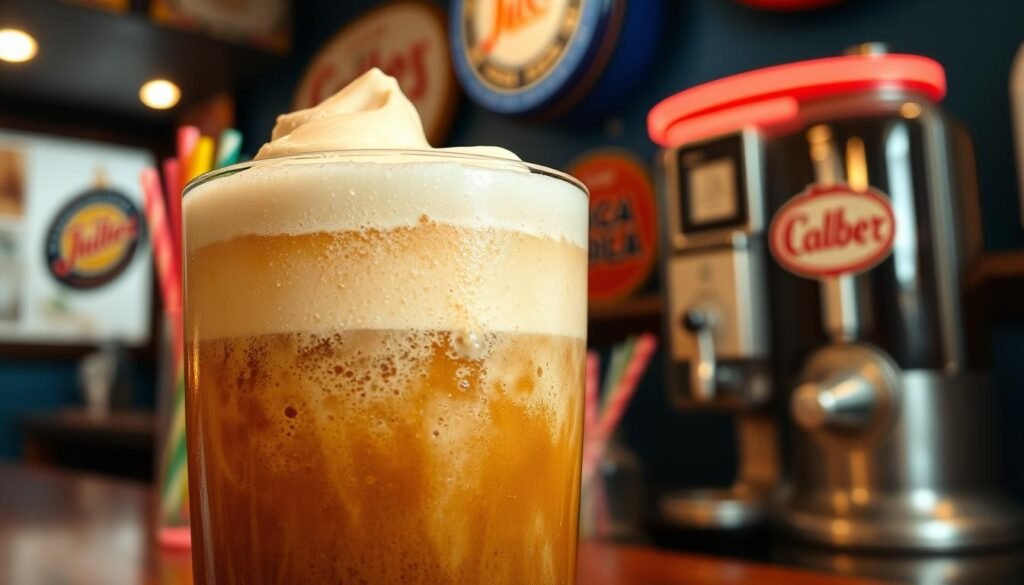
Root beer’s complex base—vanilla, caramel, wintergreen, birch, licorice, sarsaparilla, anise, and cinnamon—gives the ice cream a true soda-shop vibe. We control sweetness and strength so the dessert matches how much we like root beer, from bold fountain punch to a gentle family-friendly profile.
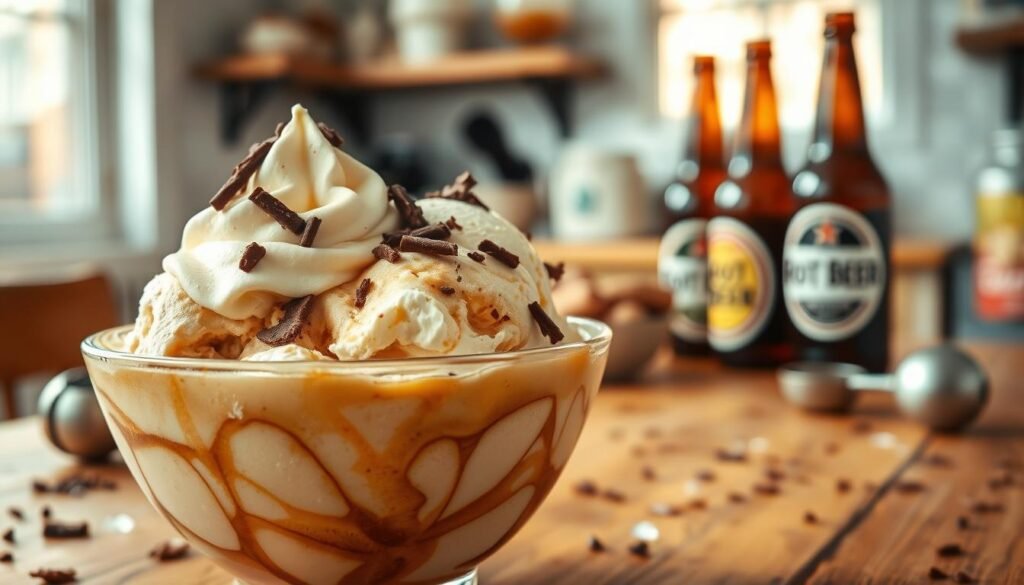
Swirls of vanilla recreate that layered counter taste, and a drizzle of chocolate lifts the experience for special guests. We also value variety: orange, black cherry, birch beer, and cream soda all adapt to the same reliable technique.
- Cleaner scoops than a float, with quick serving options for cones or a beer float bar.
- No stabilizers—just fresh dairy for a creamy, scoopable result.
- Smaller batches save money and let us test recipes while keeping flavor in check.
Ingredients and tools you’ll need for the perfect churn
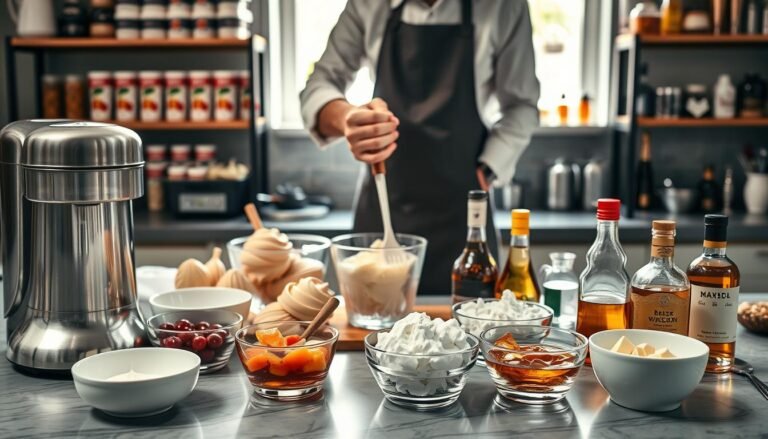
A tight, measured mise en place keeps texture and flavor repeatable. We list three ingredient paths and the equipment that makes churns consistent.
Classic extract-based
For a bold soda-shop profile, whisk 2 cups heavy cream, 1 cup milk, 14 oz sweetened condensed, 4 teaspoons root beer extract, and 1 1/2 teaspoons vanilla in a chilled bowl.
Soda-based
For a float-like base, de-bubble 24 oz flat root beer, then mix with 1 cup whole milk and 1/2 cup sweetened condensed. Pre-chill this cup of base at least two hours for better texture.
Syrup-based
For a syrup route, whisk 1 1/2 cups heavy cream, 1 cup whole milk, 1/2 cup soda syrup, and 1/4 teaspoon kosher salt. The pinch of salt rounds sugar and lifts the root aroma.
| Version | Key measures | Texture note |
|---|---|---|
| Extract | 2 cups heavy; 1 cup milk; 14 oz sweetened condensed; 4 tsp extract; 1.5 tsp vanilla | Full-bodied, stable |
| Soda | 24 oz flat root beer; 1 cup whole milk; 1/2 cup sweetened condensed | Light, float-like (pre-chill) |
| Syrup | 1.5 cups heavy; 1 cup milk; 1/2 cup syrup; 1/4 tsp salt | Balanced aroma, scoopable |
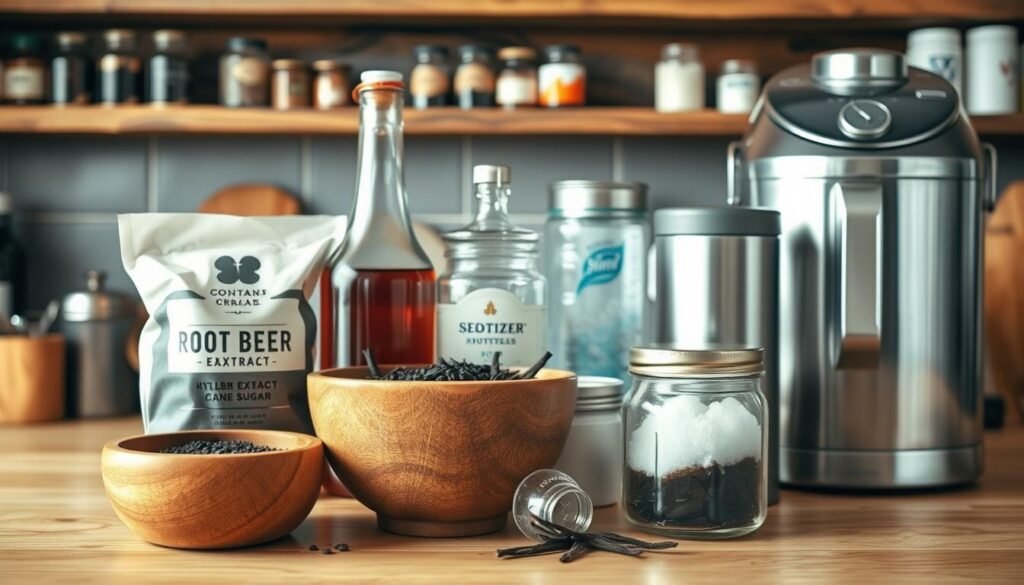
- Equipment: a frozen canister or chilled bowl, a trusted ice cream maker or cream maker, and a clean dasher.
- Prep: measure teaspoons and cups accurately; a cold container reduces melt-and-refreeze harm.
- Finish: keep an airtight container ready in the freezer and use a sturdy scoop for serving.
How To Make Root Beer Ice Cream step by step
We follow a tight routine: chill, churn, and finish so texture stays creamy and free of icy pockets.
Prep and chill
Whisk the full mixture in a chilled bowl until smooth. If using soda, flatten it by stirring or resting, then blend with the dairy and chill at least 2 hours so the base is very cold.
Churn
Confirm your ice cream maker canister is frozen and assemble the maker. Pour the base into the cream maker and churn according manufacturer instructions, typically 20–30 minutes, until it reaches soft-serve thickness.
Set the texture and serve
Transfer the fresh root beer ice to a pre-chilled airtight container. Press parchment onto the surface, freeze 2–4 hours for scoopable firmness, then serve in bowls, cones, or float-ready cups.
- Never mix raw ingredients inside the machine; blend in the bowl first to avoid frozen streaks.
- Keep the freezer closed during the first hour to prevent ice crystals; rotate the container later if your freezer has hot spots.
- Wipe the maker and dasher immediately after use to protect flavor and equipment life.
| Step | Time | Note |
|---|---|---|
| Chill base | 2 hours | Very cold before churn |
| Churn | 20–30 minutes | According manufacturer instructions |
| Freeze | 2–4 hours | Scoopable firmness |
Pro tips, texture control, and troubleshooting
A few simple adjustments keep texture silky and solve the usual churn pitfalls.
De-bubbling and pre-mixing
Let soda sit or stir gently until all foam falls away. We give it a few minutes so trapped air won’t create ice shards during churn.
Always whisk the full mixture in a chilled bowl. That ensures even distribution of sweetened condensed, milk, and heavy cream before the canister gets filled.
Fat balance, chill, and churn
Higher fat yields a silkier mouthfeel; lower fat bases need extra-cold chill and careful churn time. We aim for 20–30 minutes of churn, then freeze for 2–4 hours for firm scoopability.
Follow the maker and storage rules
We follow the ice cream maker manufacturer instructions for canister freezing, fill lines, and run minutes. Overfilling or warm canisters stretches churn time and harms texture.
Transfer to an airtight container, press parchment to the surface, and store at the back of the freezer for steady temperature and scoop-through firmness.
Troubleshooting and nutrition
If texture is sandy, we check whether the base was fully chilled and the canister fully frozen. If flavor seems muted, let scoops rest a minute so aroma blooms.
| Version | 1/2 cup cal | note |
|---|---|---|
| Extract | 379 | higher fat, some iron |
| Soda | 184 | lighter, less fat |
| Syrup | 395 | rich profile |
Flavor twists, add-ins, and serving ideas we love
Small shifts in mix-ins and sauces let us transform a scoop into a new treat. We keep the core technique the same so our recipes stay reliable while the taste changes.
Two ways to float
Serve a scoop of the beer ice cream and add a splash of chilled soda for a doubled-up root beer float. Or scoop vanilla ice cream and pour soda over it for the classic contrast.
Swirls, ripples, and the brown cow
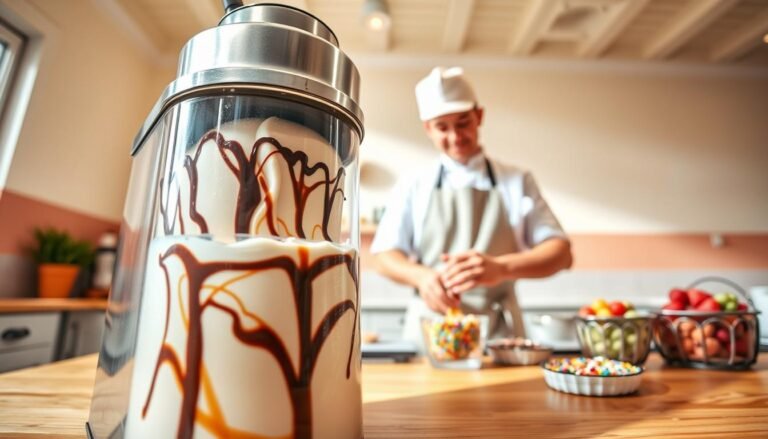
We fold thin vanilla ribbons into the churned base, then pipe a streak of warm chocolate fudge for a brown cow vibe. A milk chocolate shell or bittersweet drizzle balances sugar and adds texture.
Soda-shop swaps and simple toppings
Rotate sodas—orange, black cherry, birch, or cream soda—using the same base technique for fresh flavor. Offer a toppings bar with whipped cream, sprinkles, shaved chocolate, and crushed wafers so guests customize without masking the soda notes.
- Measure small cups for kids and top with a dollop of whipped cream.
- Fold in mini chips late in churn for even crunch that won’t sink.
- Label pints by soda so we compare flavors side by side.
| Serve | Key add-in | Best for | Finish |
|---|---|---|---|
| Beer float — doubled | Splash of soda over beer ice cream | Bold, effervescent | Whipped cream |
| Classic float | Vanilla ice cream with soda | Timeless contrast | Chocolate shavings |
| Brown cow swirl | Vanilla ribbon + fudge | Soda-shop style | Drizzle of chocolate |
| Soda rotation | Orange/black cherry/birch | Tasting flights | Grated chocolate |
Bring it all together today: churn, freeze, and enjoy
Let’s schedule the chill, churn, and freeze so a scoop is ready the same day. Chill the base at least 2 hours, churn about 20–30 minutes, then set in the freezer for 2–4 hours or overnight for extra firmness.
Set out a chilled bowl, a fully frozen canister for the ice cream maker or cream maker, and an airtight container. Clear a spot in the freezer for quick transfer and label the pint with method and date.
Taste from a cup right after churn, then again after set to compare texture. Serve into cones or bowls, or build a float with a small pour of chilled soda over a scoop of root beer ice cream.
Store leftovers sealed at the back of the freezer and allow a five-minute temper before scooping. These simple steps make our recipes repeatable and reliable for guests or a friendly tasting flight.