How To Make Boozy Ice Cream
We welcome you to a clear, practical introduction that guides our readers through a spirited frozen dessert. In this opening, we set expectations about texture, flavor, and simple science so you can succeed on the first try.
Adding alcohol softens the final scoop without melting structure. Water freezes at 32°F while ethanol drops far lower, and common 80‑proof vodka freezes near −16°F. That means modest amounts raise the liquid fraction in churned mixes and ease scooping.
We outline a stable custard base before any spirit joins the vat. We also flag safe alcohol limits per quart so the batch still sets and tastes balanced.
Expect clear steps, gear notes, and flavor ideas—from espresso martini riffs to whiskey caramel—so both first timers and seasoned makers can craft reliable homemade ice cream.
What Makes Boozy Ice Cream Different Right Now
Alcohol changes more than flavor; it alters freeze behavior and how the scoop feels at serving. We focus on the physical reasons so you can control softness without losing body.
Water freezes at 32°F while ethanol is far lower, and 80‑proof vodka sits near −16°F. Adding spirit lowers the mix’s freezing point and raises the unfrozen syrup fraction. That shift yields a softer scoop but can increase melting and larger ice crystals over time.
Alcohol’s low freezing point and why it matters
When alcohol blends with milk, sugar, and fat in the base, the overall freezing and melting points drop. The result is more liquid at freezer temperatures and faster scoopability straight from the pint.
Softer scoop vs. icier melt: the key distinction
Softness is immediate; iciness develops with repeat freezer cycles. Over weeks, small crystals can grow if the base wasn’t thickened or chilled properly.
- Microstructure: tiny ice crystals in a syrupy fat matrix.
- Practical tip: cook the base until it coats the spoon, chill for several minutes, then age for best results.
- Stabilizers like yolks and viscous sweeteners help preserve smooth mouthfeel.
| Component | Freezing Point | Effect on Final Product |
|---|---|---|
| Water | 32°F | Forms the ice phase; controls firmness |
| Ethanol | −173°F | Lowers freezing point; increases unfrozen syrup |
| 80‑proof vodka | ≈−16°F | Softens scoopability; needs limits per quart |
Essential Ingredients for a Creamy, Scoopable Base
Our focus here is on the ingredients that keep the final pint creamy and scoop-ready. We set targets for fat, sweetness, and protein so the frozen dessert holds body even after spirits are added.
Cream, whole milk, and fat balance
Use a mix of cream and whole milk to reach a butterfat level that gives richness without greasiness. A higher fat ratio supports body and reduces large ice crystals as the pint ages.
Sugar, salt, and vanilla for flavor and body
Sugar does double duty: sweetness and freezing point control. Cut sugar modestly if you plan sweet swirls so the base does not over-sweeten.
A pinch of salt wakes up flavors, and a measured touch of vanilla bridges spirit notes like whiskey or coffee liqueur.
Egg yolks and protein for silky custard
Egg yolks supply protein and emulsifiers that stabilize fat droplets and create a custard that resists iciness. Use fresh yolks and temper them after steeping any botanicals in milk for layered flavor.
| Ingredient | Role | Target |
|---|---|---|
| Cream | Butterfat for mouthfeel | High but balanced |
| Whole milk | Thins base, adds dairy notes | Moderate |
| Egg yolks | Protein, emulsifier, silkiness | 2–4 per quart |
Choosing the Right Alcohol for Flavor and Texture
Picking an alcohol means balancing bold notes with freezing behavior in the base. We weigh proof, sweetness, and water content so the pint stays scoopable and tastes true.
Spirits: style and intensity
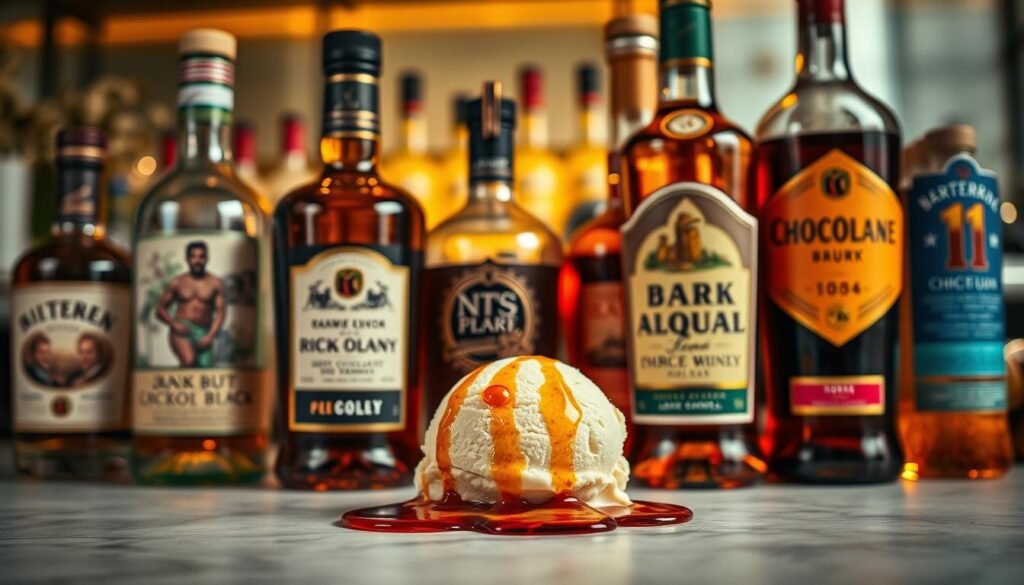
Whiskey, rum, and brandy add caramel, oak, and toast. Gin and tequila bring botanical or agave brightness.
Use up to five or six tablespoons of 80‑proof per quart as a guideline. Higher proof needs smaller amounts to avoid a soft, slow‑setting pint.
Liqueurs and fortified wines
Lower‑proof liqueurs (20–40 proof) let us add more volume and sweetness. They can also overpower, so we count tablespoons against other sweeteners.
Beer and wine: reducing over low heat
We reduce beer or wine over low heat to concentrate aroma and cut water. Reserve a tablespoon or two un‑reduced for fresh top notes after churn.
| Alcohol Type | Flavor Notes | Proof Guidance | Tablespoons per Quart |
|---|---|---|---|
| Whiskey/Rum | Vanilla, oak, caramel | Higher proof — use sparingly | 3–5 tbsp |
| Gin/Tequila | Botanical, citrus, agave | Moderate proof — adds brightness | 2–4 tbsp |
| Liqueurs/Fortified | Sweet, integrated flavor | Lower proof — more volume | 4–6 tbsp |
| Beer/Wine (reduced) | Fruity, malty, sparkling lift | Reduce over low heat; adjust cups | Concentrate then add 1–2 tbsp fresh |
Gear We Use: From Large Bowl to Ice Cream Maker
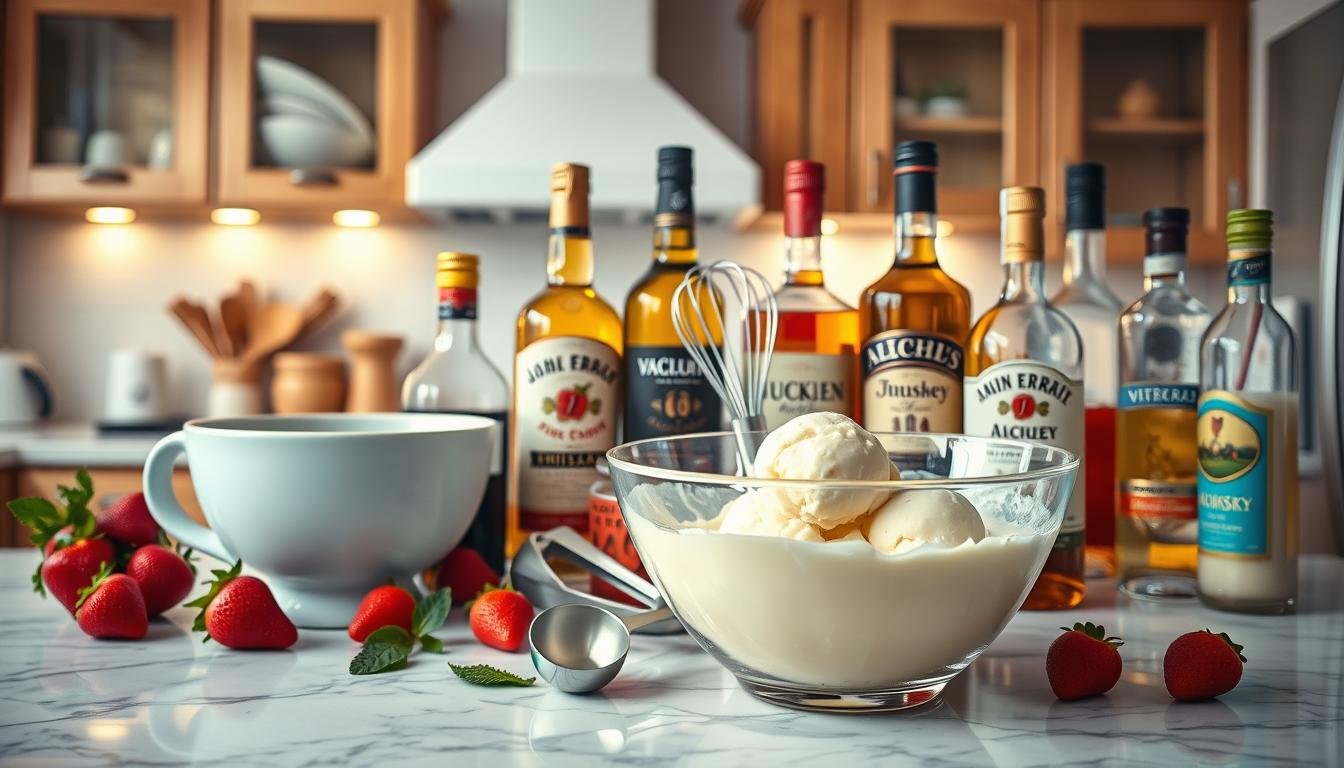
We outfit our kitchen with tools that make the process smooth and repeatable. Proper gear shortens the timeline and protects texture when we churn spirited pints.
Stovetop basics and lab tools
Use a heavy pan and an instant-read thermometer for low, gentle heating. This prevents scorching and helps us hit the coat-the-spoon temperature accurately.
Strain the cooked mix through a fine sieve to remove any curdled bits or grounds. Sieving yields a silky base that churns into a finer body.
Churning: machine versus hand
- Must-haves: heavy pan, thermometer, fine sieve, sturdy spatula, ladle, and a reliable scoop for transfers.
- Machine tip: pre-freeze the machine bowl; most units need 12–24 hours in the freezer and about 20–30 minutes of churn time for a soft set.
- Hand-churn option: use a large freezer-proof bowl and electric beaters. Alternate 15–20 minute freeze cycles with beating to mimic machine action.
Storage, organization, and finishing touches
Move the churned ice cream into an airtight container to prevent freezer burn and off-flavors. Level the surface and press parchment on top before sealing.
Label each container with batch notes and date. Keep containers on a flat shelf in the coldest part of the freezer and plan counter space so pans and bowl workflow stays clean and efficient.
| Tool | Role | Practical tip |
|---|---|---|
| Heavy pan | Even heat for custard | Use low flame and an instant-read thermometer |
| Pre-frozen bowl | Churn medium to soft set | Freeze 12–24 hours; churn ~20–30 minutes |
| Airtight container | Storage and freshness | Press parchment, seal tightly, label with date |
Build the Cream Base: Step-by-Step on Low Heat
We start at the stove and walk a steady path from warm dairy to a chilled custard ready for the churn.
Heat milk and cream in a heavy pan over low heat with sugar and a pinch of salt. Steep coffee or vanilla in the warmed milk for 60 minutes, then strain and reheat gently. This brings flavor without scorching.
Whisk egg yolks until smooth. Temper them by adding warmed dairy in slow, steady streams while whisking. Return the mix to the pan and cook over low heat, stirring constantly until the custard coats the back of a spoon — that is our sign the protein has set and the base has body.
Transfer the custard, press parchment onto the surface, and let it cool about 60 minutes at room temp. Then chill for at least 6 hours or overnight so the cream base is very cold before churning.
Before the machine run, sieve the chilled custard for a pristine texture. Thorough chilling improves overrun, limits large ice crystals, and helps the fat and protein network hold up when spirits are added. Time the machine bowl freeze so it reaches the correct temp at the same moment the base is ready.
| Step | Action | Timing |
|---|---|---|
| Infuse | Warm milk and steep flavoring | 60 minutes |
| Temper | Whisk yolks, add warmed dairy slowly | Minutes at stove; steady pace |
| Cook | Low heat until coats spoon | Watch minute-by-minute |
| Cool & Chill | Cover surface, cool, then refrigerate | 60 minutes cool; 6+ hours chill |
When and How to Add the Booze
Timing matters. We always stir alcohol into the mix after the custard has finished cooking and cooled in the refrigerator.
Adding spirits while the custard is hot drives off volatile aromatics and thins protein structure. That dulls nuanced flavors and can weaken the emulsion that holds fat and milk together.
Chilled spirits only
We chill the spirits so they do not raise the base temperature and slow churning. A warm pour can add several minutes of churn time and risk under‑setting.
- Fold booze gently in the bowl to protect the emulsion.
- Keep within per‑quart limits; excess alcohol prevents proper setting.
- Taste and adjust sugar or salt after adding the spirit.
- Log amounts and proof for future batches.
| Action | Why | Practical tip |
|---|---|---|
| Add after chilling | Preserves aroma, keeps structure | Stir in chilled spirit in the chilled bowl |
| Layer spirits | Balances proof and flavor | Combine a high‑proof splash with a low‑proof liqueur |
| Adjust sweetness | Drier spirits can taste sharp | Add a touch more sugar or vanilla if needed |
Finally, verify the custard is refrigerator‑cold before going into the machine. That keeps churn time steady and helps the finished ice cream set in reasonable minutes.
How To Make Boozy Ice Cream
We start the final steps at the churner, where motion and temperature decide texture.
Churn in a machine to soft scoop in minutes
Run a pre-chilled machine bowl for about 20–30 minutes until the mix holds soft peaks. That yields a soft scoop ready for transfer.
Move the batch into an airtight container, level the surface, and lay parchment on top after 2–3 hours. Freeze 4–6 hours for firm set.
Hand-churn method: timed beat-freeze cycles
For manual work, freeze the base 1–1½ hours, beat 2–3 minutes, and repeat 6–8 cycles at 45–60 minute intervals. This mimics churn action and keeps ice crystals small.
Keep the bowl cold between cycles and limit time out of the freezer. Use a pan or container sized to allow a 30–40% rise for overrun without overflow.
| Method | Action | Key Cue |
|---|---|---|
| Machine | Churn 20–30 minutes; then freeze | Thick, smooth, holds ridges |
| Hand | Freeze; beat 2–3 min; repeat 6–8× | Even texture; no large ice crystals |
| Storage | Press parchment after 2–3 hours | Prevents freezer burn; keeps flavor |
Judge readiness by a smooth, thick texture that holds ridges before final hardening. Our earlier base steps make these finishes reliable and repeatable for any home recipe.
Find Your Limit: Tablespoons, Proof, and Per Quart
Measuring alcohol precisely keeps texture predictable and flavor true. For a quart of base we cap 80‑proof additions at about five to six tablespoons. More than that often prevents the ice phase from forming a firm set.
Lower‑proof liqueurs let us add a bit more volume, but they bring extra sugar and strong flavor quickly. Reduce wines or beer down to a viscous syrup—cook cups of liquid until concentrated—so you preserve character without diluting the cream base.
Practical rules we follow
- Limit 80‑proof spirits to 5–6 tbsp per quart.
- Combine spirits for balance: e.g., 4 tbsp rye + 1 tbsp sweet vermouth.
- Add alcohol gradually in the final minutes before churn and taste.
- Use dashes of amari or bitters rather than tablespoons.
- Adjust sugar and salt when using sweet liqueurs to keep balance.
| Category | Tip | Why it matters |
|---|---|---|
| 80‑proof spirits | 5–6 tbsp per quart | Keeps ice cream from staying soupy |
| Liqueurs | Use more cautiously; cut sugar | Adds sweetness and strong aroma |
| Wine/Beer | Reduce to syrup; add 1–2 tbsp fresh | Concentrates flavor without extra water |
Measure in tablespoons, log the proof, and design each recipe aware of both flavor and physics. Overshoot the limit and the batch will take many more minutes to set—or not set at all.
Dialing Texture: Fat, Sugar, Eggs, and Stabilizing Choices
A stable, well-built base is the secret to a scoop that holds up when spirits are added.
Alcohol lowers the freeze point and softens the mix but adds no structural body. We therefore boost fat and protein in the base so the final ice cream feels rich rather than watery.
Why alcohol softens but doesn’t add body
Alcohol increases the unfrozen syrup fraction at serving temps. That creates easy scoopability but also faster melt and larger ice crystals with repeated freezer cycles.
Using butterfat, yolks, and viscous sweeteners wisely
Raise butterfat or add extra egg yolks to build creaminess. Yolks supply protein and emulsifiers that hold fat and water together.
- Use viscous sweeteners like glucose or invert syrup to add body without overdoing sugar.
- Add a pinch of salt and a touch of vanilla to balance lower sugar when liqueurs bring sweetness.
- Chill the base thoroughly and store airtight; good chilling limits crystal growth during freezer cycles.
| Adjustment | Effect | Practical tip |
|---|---|---|
| Increase butterfat | Richer mouthfeel; less perceived iciness | Use more cream, reduce milk slightly |
| Add yolks | More protein/emulsifier; stable body | 2–4 yolks per quart for silkiness |
| Viscous sweetener | Thicker syrup phase; smoother melt | Replace part of sucrose with invert or glucose |
Flavor Blueprints We Love
These short blueprints show how classic cocktails and fruit reductions translate into chilled desserts. Each plan keeps texture in mind while letting spirit notes sing through the base.
Irish whiskey with salted caramel swirl
We use a stovetop custard and fold in Irish whiskey after chilling. A salted caramel ribbon adds contrast and a sprinkle of toasted pecans gives crunch.
Keep caramel sweetness lower in the base so the swirl does not overwhelm. Track tablespoons and proof carefully.
Espresso martini profile
We blend Baileys for extra cream, coffee liqueur for roast, and a splash of vanilla vodka for lift. Stir chilled spirits into the cold custard just before churn for bright aroma.
Cocktail conversions: Manhattan, margarita, Old Fashioned
Rye plus a touch of sweet vermouth becomes a Manhattan riff. Tequila with orange liqueur and lime zest brightens a margarita-style batch. Bourbon and orange peel recreate an Old Fashioned.
Fruit-forward ideas
Campari with raspberry makes a tart, vivid pint. For pear-riesling-ginger, reduce the wine to a syrup—measure in cups, then add one to two tablespoons fresh for lift.
- Balance caramel sweetness by cutting base sugar when using swirls.
- Add vanilla sparingly to harmonize barrel notes without masking them.
- Record proof and tablespoons per quart so texture stays predictable.
| Name | Key Spirits | Add-ins | Proof Guidance | Notes |
|---|---|---|---|---|
| Irish Whiskey Swirl | Irish whiskey | Salted caramel, toasted pecans | 3–4 tbsp of 80‑proof | Keep base sugar low; swirl after churn |
| Espresso Martini | Baileys, coffee liqueur, vanilla vodka | Espresso shot, cocoa nibs | Combine low and moderate proof liqueurs | Add Baileys for extra creaminess |
| Pear‑Riesling‑Ginger | Riesling (reduced) | Ginger, pear compote | Reduce to concentrate; add 1–2 tbsp fresh | Use cups guidance when reducing liquid |
Each blueprint keeps us mindful of balance: spirit amount, sugar, and body. Follow the proof and tablespoon limits in the table and log each batch so our next recipe is even better.
Toppings, Mix-ins, and Serving Ideas
A simple topping choice can lift a pint from good to memorable. We layer textures and bright notes so every bite reads clean and balanced.
Caramel ribbons, chocolate shavings, and nuts
Layer churned ice cream with tablespoons of salted caramel sauce. Swirl to the container edges with a knife for even ribbons.
Fold delicate mix-ins at the end of churning so they keep shape. We add shaved dark chocolate and toasted pecans for crunch and contrast.
Affogatos, floats, and bright finishes
For a quick coffee dessert, pour hot espresso over a single scoop and serve in minutes as an affogato. For a grown-up float, top a scoop with stout or ginger beer for a fizzy, adult drink.
Finish with thin citrus zest or a few drops of bitters for aromatic lift. Portion pints with a warm scoop for clean balls and stage containers at the top of the freezer a few minutes before serving for ideal softness.
| Technique | Why it works | Quick tip |
|---|---|---|
| Ribboned caramel | Even distribution of flavor | Layer and swirl to the container edge |
| Shaved chocolate & nuts | Textural contrast | Add after churn; fold gently |
| Affogato / float | Fast service and bold aroma | Serve within minutes; use a warm scoop |
Troubleshooting: Why It Didn’t Set and How We Fix It
A runny pint can often be traced to temperature, proof, or equipment handling. We walk through quick checks and stepwise rescues so your next batch firms up reliably.
Too much alcohol or a warm custard base
Too many tablespoons of spirit will stop the ice phase from forming. If the base feels thin, chill it in the fridge for several hours and taste for balance.
Under-frozen machine bowl or overfilling the churner
An under-frozen bowl needs a full 24 hours in the freezer before reuse. Overfilling prevents proper air incorporation and leaves a soupy texture.
Rescue moves: rechill, reduce volume, rebalance base
- Return the batch to the fridge for at least two hours, then rechurn in a fully frozen bowl.
- If alcohol is excessive, make extra custard without booze and blend until texture firms.
- Split the mix and hand-churn smaller portions when volume exceeds capacity.
- Track churn minutes and pause cycles so the bowl and mix stay cold.
| Cause | Symptom | Quick fix |
|---|---|---|
| Warm base | Slow set; large ice crystals | Chill for hours; then rechurn |
| Too much alcohol | Persistent soupiness | Add plain custard; rebalance sugar |
| Under-frozen bowl / overfill | Long churn; thin texture | Refreeze bowl 24 hours; split batch |
Storage, Calories, and Best-By Timing
Proper storage keeps flavor bright and texture reliable long after the churn stops. We store pints so they resist freezer odors and minimize ice formation. A few small steps make the difference between a clean scoop and a gritty one.
Seal and shield for longer quality
We recommend a freezer-safe, airtight container for every batch. After the churn sets for a few hours, press a sheet of parchment on the top before sealing. That extra barrier reduces oxidation and guards against ice crystals.
Placement, timing, and portion notes
Keep pints in the coldest zone of the freezer and away from the door. Label each container with date, flavor, and calories per serving so rotation is easy. We advise best-by timing of about two weeks for peak texture and flavor; it remains safe longer but quality drops.
- Portion beforehand to avoid repeated temperature swings.
- If the top softens, move a pint to the top shelf for 5–10 minutes before scooping.
- Reseal promptly and keep lids clean for a tight fit.
| Tip | Why | Timing |
|---|---|---|
| Airtight container | Prevents odor and freezer burn | Store immediately after parchment is set |
| Top parchment | Limits ice crystal growth | Press after 2–3 hours frozen |
| Label with calories per serving | Helps portion control and tracking | Note date and servings on the lid |
Ready to Churn: Our Pro Tips for Your First Boozy Batch
A few focused moves at the finish line unlock consistent pints and predictable flavor. Plan the recipe and stick to five to six tablespoons of 80‑proof per quart for a reliable set.
Stage equipment and chill both base and spirits for several hours. Machine churn in about 20–30 minutes for a soft scoop; hand methods work with hourly beat‑freeze cycles.
Keep flavor simple—vanilla, salt, and balanced sugar support spirits. Log proof and measures, test a small scoop after churn for serving readiness, and swirl sauces or fold mix‑ins gently.
Portion into smaller pints for faster freezing and easier top finishes. Rotate crowd‑pleasing riffs like Irish whiskey with caramel or an espresso martini and enjoy the process of homemade ice cream.