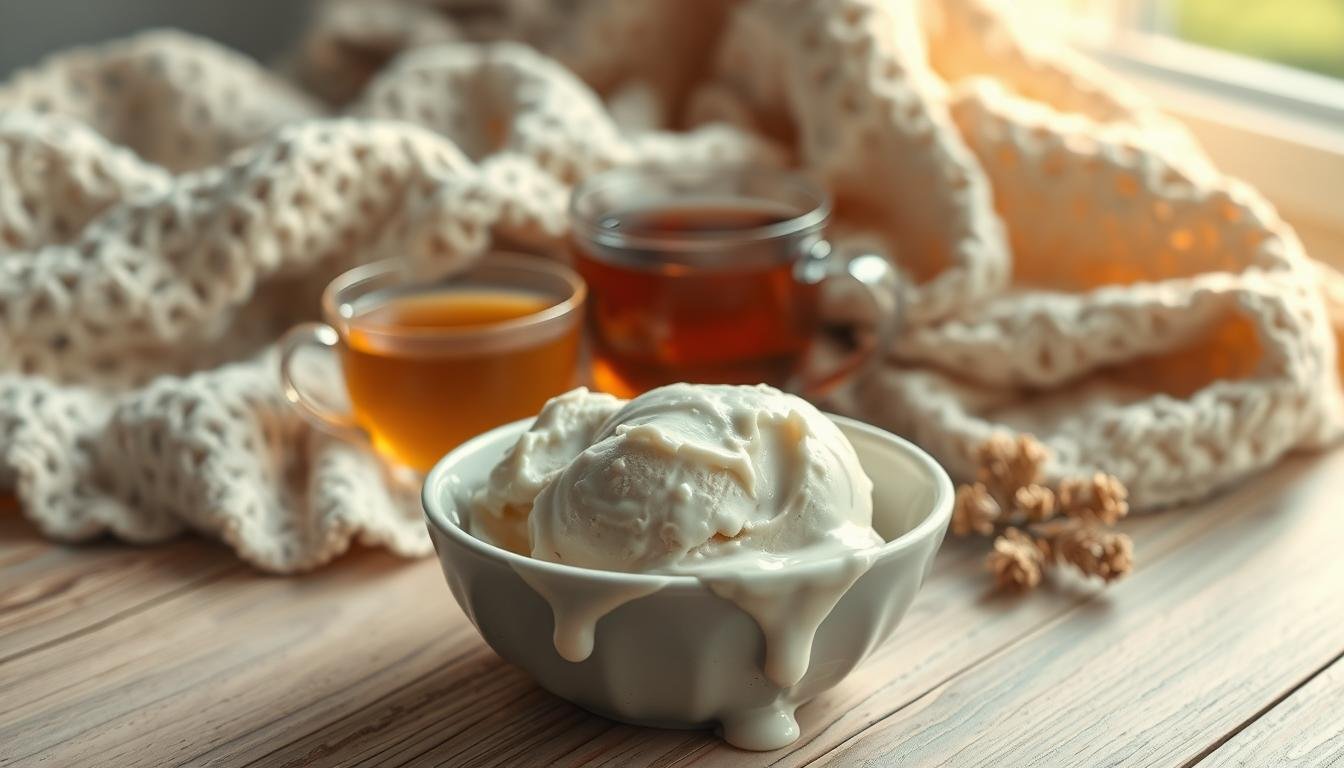
Is ice Cream Good for Sore Throat
We ask a simple question: does a cold treat truly help when your throat hurts? Many people reach for creamy, cold snacks to dull pain. What soothes right away may not always aid recovery.
We will explain why a chilled sensation can numb pain receptors and where that fits with clinical advice. Swallowing often becomes painful with a sore throat, and mild cooling can offer quick relief.
Next, we preview our approach. We weigh evidence and clinician guidance, note common symptoms that push people toward cold treats, and compare foods that soothe versus those that might irritate.
Finally, we outline what follows: the science, smart swaps, practical home care steps, and clear options on when to seek medical help. Our aim is balanced guidance so you can choose immediate comfort and support longer-term healing.
Is ice Cream Good for Sore Throat? What the science and clinicians say
Cold treats can numb pain quickly, but that effect is temporary and does not treat the underlying cause. We examine the main trade-offs so readers can choose comfort without slowing recovery.
Why cold foods may feel soothing but offer only short-term relief
Cold temperatures briefly reduce nerve signaling and ease throat pain. The numbness fades as tissues warm, so the benefit is short-lived.
How sugar can drive inflammation and weaken immune response
High sugar in many desserts can raise inflammation and lower white blood cell effectiveness. That may make it harder to fight viruses or bacteria that cause sore throat.
Dairy, mucus, and irritation: when treats may make symptoms worse
Some people report thicker saliva and more irritation after dairy. Clinicians often recommend skipping dairy if mucus or throat irritation increases.
Tonsillitis and post-tonsillectomy: when chilled, smooth foods can help
After tonsil surgery or during tonsillitis, chilled, smooth options can soothe pain. Studies show children sometimes report less immediate postoperative pain with such foods, though room-temperature diets perform similarly in many measures.

| Option | Sugar Level | Dairy | Best Use |
|---|---|---|---|
| Traditional ice cream | High | Yes | Short-term comfort; avoid if mucus worsens |
| Sugar-free popsicle | Low | No | Cooling and hydrating without added sugar |
| Fruit sorbet (low-sugar) | Moderate | No | Lighter texture; choose low-sugar varieties |
| Warm broth or soup | Low | Optional | Soothes and supports hydration and healing |
Smart ways to try cold treats without aggravating your throat
With a few smart swaps, chilled desserts can soothe the throat without causing problems. We focus on choices that reduce inflammation and avoid textures that scrape sensitive tissue.
Choose low-sugar or sugar-free options
We recommend picking lower-sugar or sugar-free frozen treats to limit inflammation while keeping a cooling effect that can help sore throat comfort. Check labels and favor products labeled no added sugar.
Non-dairy ice creams and fruit sorbets: gentler choices
Non-dairy cream bases, such as almond or coconut, often feel lighter and may avoid thicker saliva some people report with dairy. Fruit sorbets are dairy-free, but read labels—many contain added sugars.

Smooth textures and portion control
Pick smooth textures and skip crunchy mix-ins that can scrape a sore area. Single-serve cups help control portions so eating ice cream or ice treats does not replace hydrating drinks and nutrient-rich foods during recovery.
- Short ingredient lists and low added sugar
- Non-dairy alternatives if dairy increases mucus
- Single-serve or small portions to manage frequency
These options may provide quick relief, but they should complement a broader plan to help sore throat healing, not replace it.
Soothing remedies that often work better than ice cream
When the throat hurts, simple home remedies often give more consistent comfort than dessert-first choices. We focus on options that cool, calm, and support healing without adding excess sugar or irritation.
Popsicles for hydration and cooling
Choose sugar-free or 100% fruit popsicles to cool the area and help fluids stay down. These cold foods can aid hydration and reduce swallowing pain without the high sugar in many desserts.
Honey with warm water or tea
Honey can soothe irritated tissue and ease pain when mixed into warm water or a mild tea. Use honey only in children over one year old.
Salt water gargles
Mix 1 teaspoon table or sea salt in 8 ounces warm water. Gargle for 30 seconds and repeat about four times daily. This method may help reduce swelling and loosen mucus.
Warm tea and brothy soups
Warm, not very hot, teas and low-sodium broths ease discomfort and support steady fluid intake. Brothy soups can also provide nutrients when eating is difficult.
Foods and drinks to avoid
- Avoid very hot beverages, spicy meals, and acidic foods and drinks like citrus or soda.
- Eating ice or small ice chips can cool the throat when swallowing is hard, but prioritize fluids too.
| Remedy | Best use | Who benefits |
|---|---|---|
| Sugar-free popsicle | Cooling + hydration | Anyone needing temporary numbness |
| Honey in warm drink | Soothes irritation | Adults and children >1 year |
| Salt water gargle | Reduce swelling, thin mucus | Most older children and adults |
How we recommend easing a sore throat at home, step by step
Here are straightforward, evidence-based steps to manage throat discomfort at home. We focus on steady hydration, gentle foods, and simple routines that ease pain and speed recovery.

Hydrate around the clock with warm and cold fluids
Take frequent sips of warm tea, broth, or cool water to keep mucus thin and reduce irritation. Popsicles and eating ice chips can help localized cooling without added sugar.
Rest, humidified air, and soft, easy-to-swallow foods
Get extra rest and use a cool-mist humidifier to moisten dry air. Offer soft items like mashed potatoes, oatmeal, yogurt, or blended soups to avoid scraping tender tissue.
Use symptom relievers wisely and monitor response
We suggest acetaminophen at any age and ibuprofen for those older than six months when appropriate. Reassess symptoms daily and adjust options if pain or other signs worsen.
- Time gargles at night and warm drinks on waking to control pain flares.
- Choose nutrient-dense choices and fruits when tolerated to support the immune system.
- Avoid acidic, spicy, or hard foods that increase pain.
| Step | Best choice | Why it helps |
|---|---|---|
| Hydration | Herbal tea, broth, water, popsicle | Thins mucus and soothes pain |
| Rest & humidify | Cool-mist humidifier, extra sleep | Reduces dryness and irritation |
| Soft foods | Oatmeal, yogurt, mashed fruits | Easy swallowing; nutrients for healing |
| OTC relief | Acetaminophen or ibuprofen | Controls pain so you can drink and rest |
When a sore throat needs medical care
Seek medical evaluation when throat pain is severe, rapidly worse, or when breathing or swallowing is hard. We outline warning signs that suggest a bacterial cause or a more serious condition that needs prompt attention.
Red flags and signs that require prompt review
Watch for drooling, noisy breathing, trouble swallowing saliva, stiff neck, or sudden high fever. Decreased urine output and refusal to drink signal dehydration and need evaluation.
- Persistent or worsening symptoms beyond a few days.
- Rapidly progressing pain or airway changes.
- Severe cases with possible abscess or epiglottitis.
Pediatric concerns and testing
In children, drooling or breathing difficulty demands immediate medical care. Bacteria such as strep may require rapid testing and antibiotics if confirmed. Many viral causes improve with supportive care at home, but clinicians must rule out urgent causes.
| Sign | Why it matters | Action |
|---|---|---|
| Drooling / unable to swallow | May indicate airway compromise | Seek emergency medical care |
| High fever or neck stiffness | Possible severe infection | Contact clinician for testing |
| Dehydration | Reduced urine, refusal to drink | Immediate evaluation and fluids |
Your best path to relief today
Start with steady, low-sugar hydration: warm tea, low-sodium broth, and water. Add honey if age allows and use salt water gargles (1 teaspoon salt in 8 ounces warm water) to ease irritation.
Choose 100% fruit or sugar-free popsicles to cool and hydrate. If you want ice cream, pick low-sugar, non-dairy, smooth-texture options in small portions so foods do not replace nourishing drinks and soft meals.
These steps reduce inflammation, support the immune system, and limit pain. Watch symptoms closely; seek care if swallowing or breathing worsens, drooling starts, or dehydration appears. Use this plan at home and adjust choices as your throat improves.